
Last updated November 15, 2026
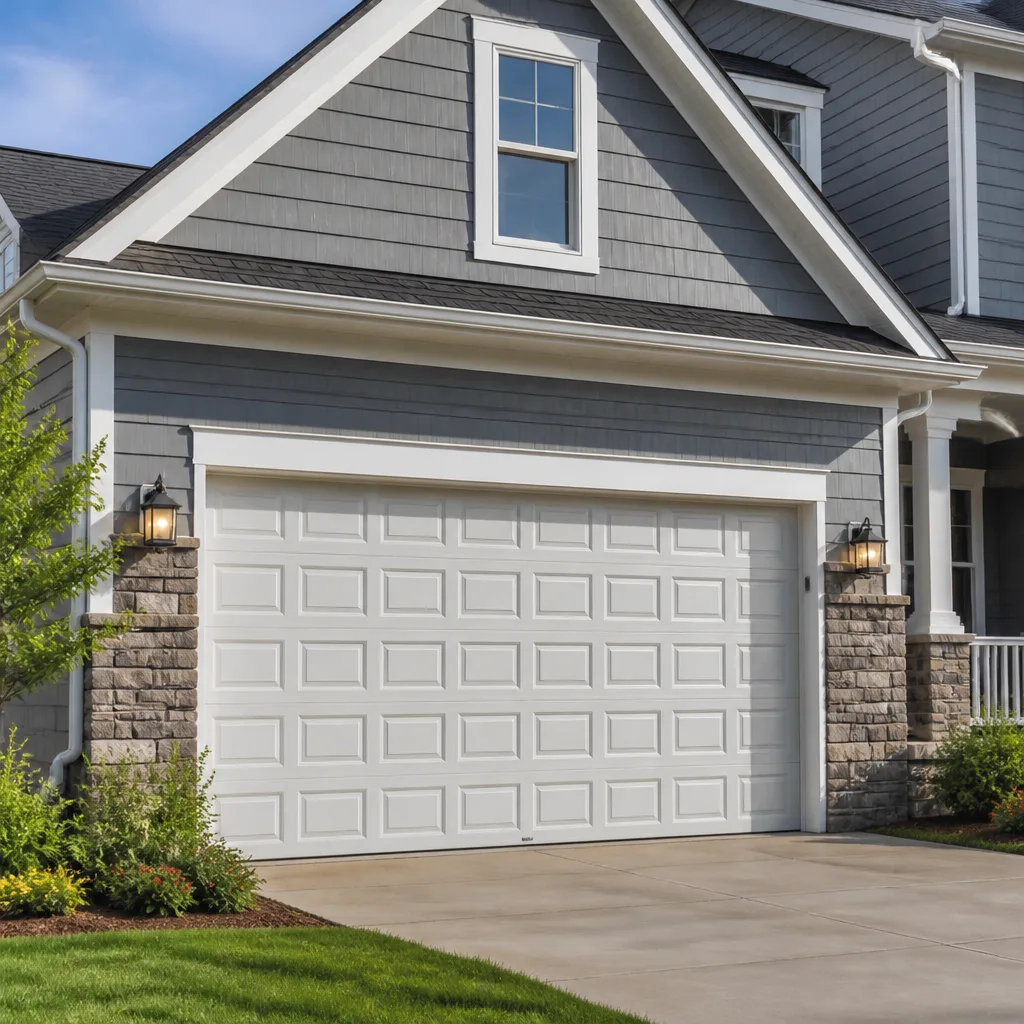 Raised-panel steel
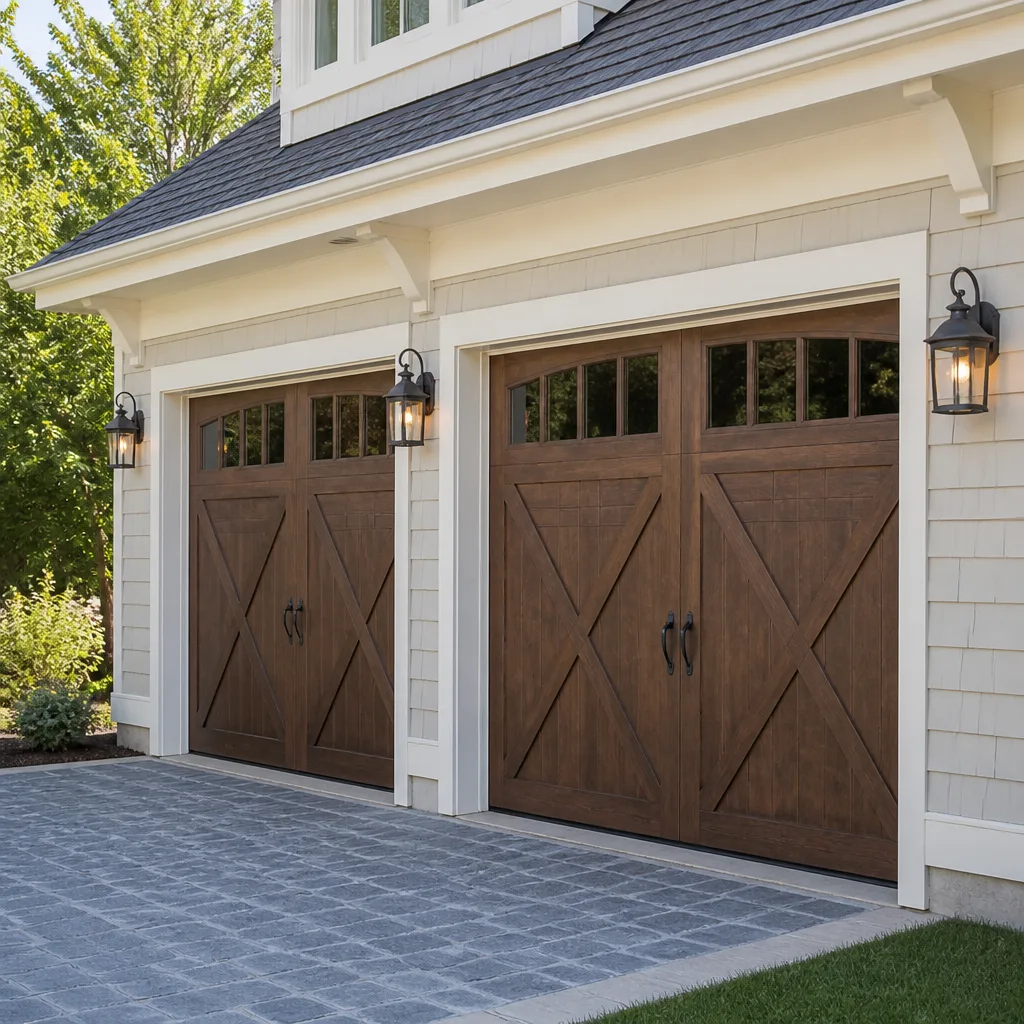 Carriage house
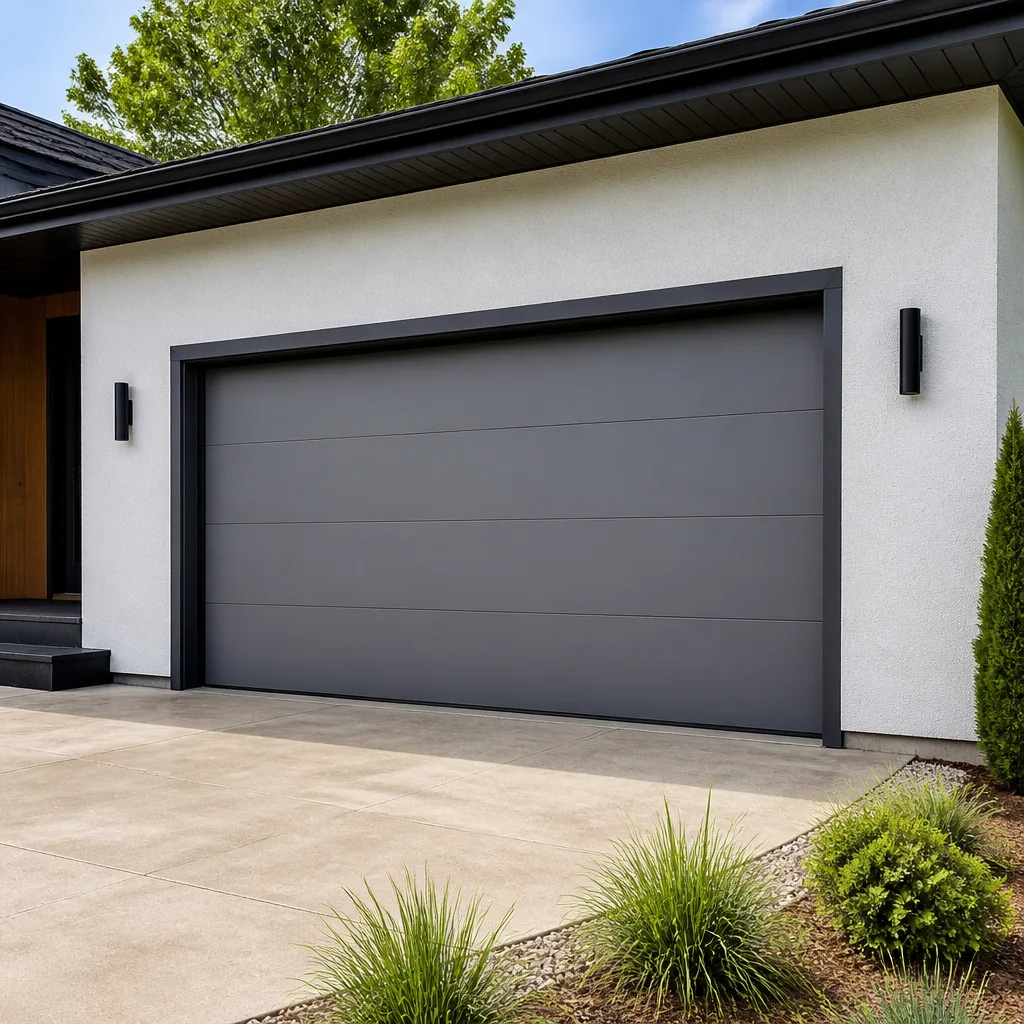 Modern flush
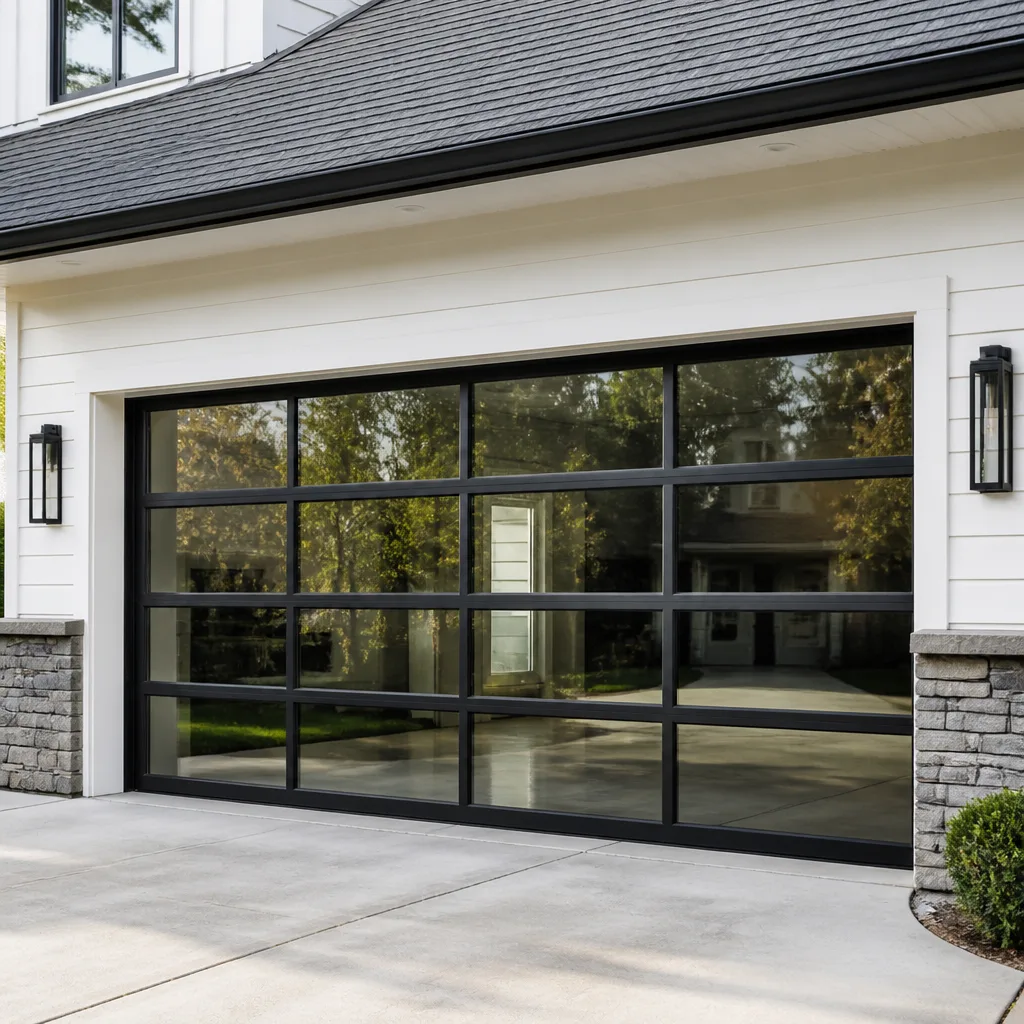 Full-view glass
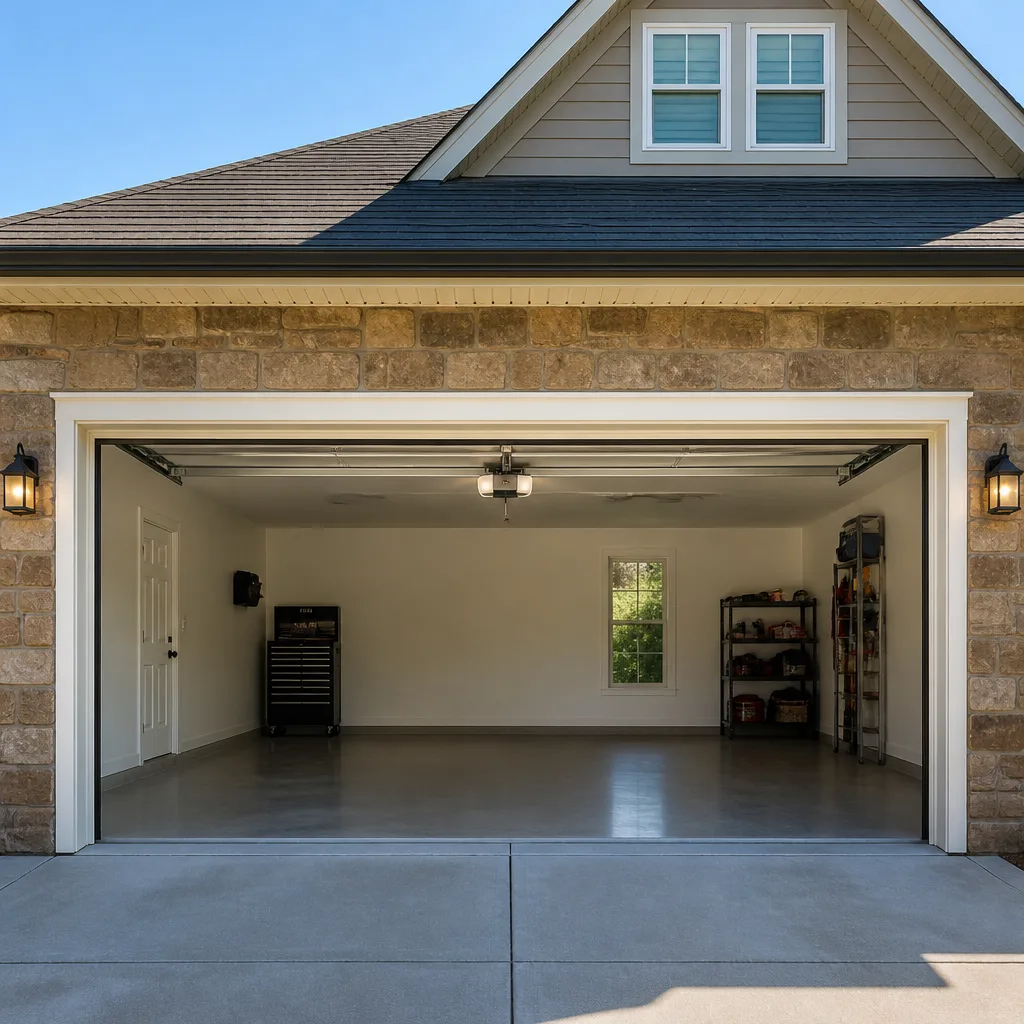 LiftMaster openers
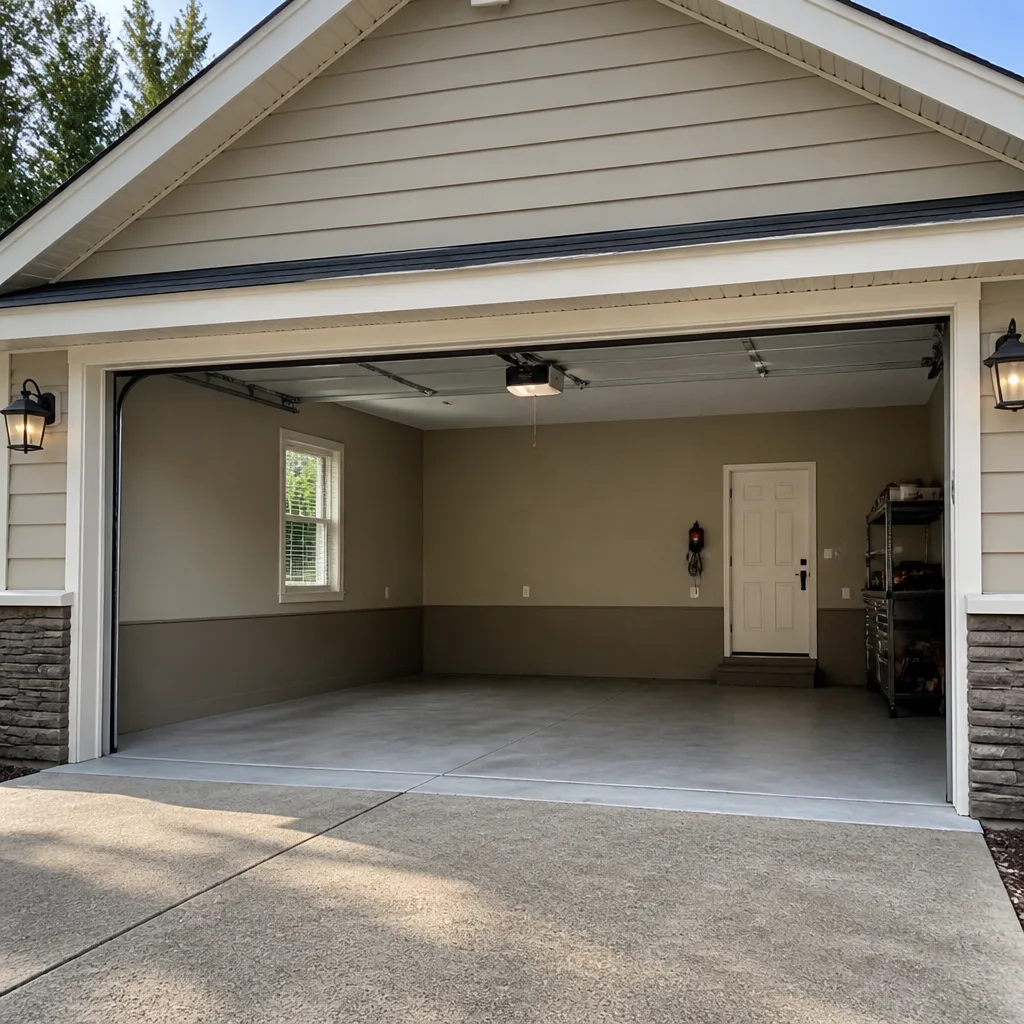 Chamberlain openers
Full 25-point door and opener safety check with every visit - springs, cables, rollers, tracks, and your LiftMaster or Chamberlain opener included
You get a price before we start. It does not change when the pro arrives.
Get your free estimateThe Complete Guide to Garage Doors in St. Paul
Most national garage door guides are written for a climate that doesn’t exist here. They treat “cold” as a single condition and ignore the far more destructive pattern St. Paul actually lives with: a freeze-thaw cycle that swings the ground and the hardware above it dozens of times each winter. That cycle, combined with century-old homes that were never built to a standard rough opening, is why so much generic buying advice falls apart in this city. A door that performs fine in a steady-cold climate can bind, seal poorly, or rattle loose here. This guide covers what actually holds up in St. Paul – how to measure before you buy, which materials survive our humidity swings, how to tell a real failure from an installation error, and when a repair beats a replacement.
Quick Answer
A garage door in St. Paul needs to handle a freeze-thaw cycle, not just cold, which is why bottom seals, track alignment, and spring tension wear differently here than in a steady-cold climate. Before buying anything, measure your rough opening – pre-1960 homes in this city frequently have non-standard dimensions that off-the-shelf doors won’t fit. For most homeowners, a properly tuned existing door with brand-fluent repair service outperforms a rushed replacement.
Styles & brands we work with
- Raised-panel steel
- Carriage house
- Modern flush
- Full-view glass
- LiftMaster openers
- Chamberlain openers
Table of Contents
- Why St. Paul’s Freeze-Thaw Cycle Is Harder on Doors Than Steady Cold
- Measuring Your Rough Opening Before You Buy
- Which Door Materials Hold Up to Minnesota Humidity Swings
- Attached vs. Detached Garages: Insulation and Weatherstripping Specs
- Brand Fluency and Why Multi-Brand Diagnosis Matters
- Springs, Tension, and the Cold-Weather Failure Pattern
- A Seasonal Maintenance Routine That Fits St. Paul
- Repair or Replace? A Decision Framework
Why St. Paul’s Freeze-Thaw Cycle Is Harder on Doors Than Steady Cold
St. Paul averages 54 days per year below 0°F wind chill. At that threshold, standard torsion spring steel loses measurable elasticity – it doesn’t shatter, it just stops behaving the way it was rated to. Most national guides never mention temperature rating once, which is the first sign they weren’t written for this market. But the cold itself is only half the story.
The real damage comes from the thaw. When the ground freezes and expands, then thaws and contracts, the slab under a garage door moves. It heaves. That motion pushes against the bottom seal, nudges the track out of plumb, and slowly loads the spring unevenly. A door that sits dead level in October can be binding by February without anyone touching it. Repeat that cycle 30 or 40 times a winter and the cumulative wear is significant.
Here’s what that means in practice:
- Bottom seals degrade from the ends inward as the slab heaves and the seal flexes against it. A cracked or flattened seal lets in meltwater, which then refreezes and grabs the door.
- Track alignment drifts. Tracks that were square in fall can be a fraction off by mid-winter, which makes the door drag and stresses the opener.
- Spring tension changes with temperature, and an unevenly loaded spring from a heaving slab compounds the effect.
In our experience across St. Paul, a door that “suddenly stopped working” in January usually started drifting in November. The freeze-thaw cycle is the culprit, and catching it early is cheaper than waiting for a failure. If your door is already dragging or sticking, that’s a sign to look at garage door repair before the next deep freeze.
Measuring Your Rough Opening Before You Buy
This is where a lot of St. Paul homeowners get burned. Much of the city’s housing stock predates 1960, and garages from that era were not built to the standard rough openings we use today. A door ordered to a “standard” size may not fit, and a door that’s forced into a non-standard opening will never seal or run cleanly. Measure first, buy second.
Here’s the order that works:
- Measure the opening width at the top, middle, and bottom. If the three numbers differ, you have a non-standard or out-of-square opening, and the widest point is what counts.
- Measure the opening height on the left, center, and right. Again, take the largest.
- Measure the headroom – the clear space from the top of the opening to the ceiling. This determines what opener and track configuration will work.
- Measure the side room on each side of the opening. Torsion setups and some track layouts need clearance here.
- Check the backroom – the distance from the opening to the back wall – to confirm the door can travel fully open.
Write all of it down before you shop. In older St. Paul neighborhoods, we’ve seen openings that are a couple of inches off standard in each direction, which is enough to rule out a stock door. If your measurements come back odd, that’s not a problem to work around – it’s information that tells you what to order. A free measure and a written price beats a return and a re-order every time.
Which Door Materials Hold Up to Minnesota Humidity Swings
St. Paul’s summers are humid and its winters are dry and cold. That swing is brutal on materials that absorb or trap moisture, and it’s the reason a door that performs well in a mild climate can fail here. Match the material to the swing, not just to the cold.
- Steel is the workhorse for this climate. It doesn’t absorb moisture, it holds its shape through freeze-thaw, and modern insulated steel doors handle the humidity swing well. Gauge matters – thinner steel dents and flexes more, which throws off track alignment over time. For an attached garage, insulated steel is usually the practical answer.
- Wood composite looks warmer and suits older St. Paul homes, but it needs more attention. Composite resists moisture better than solid wood, though the finish is what protects it, and that finish takes a beating from our temperature swings. Plan on refinishing more often than a steel door needs anything.
- Fiberglass handles moisture and temperature change without warping, which makes it a sensible pick for a detached, unheated garage. It won’t dent like steel, but it also won’t insulate an attached garage as well unless it’s built with a proper core.
The mistake we see most is choosing a door for looks alone and ignoring how it behaves through a Minnesota year. A Clopay or Amarr steel door with a good insulation core usually outperforms a prettier wood door in an attached garage, simply because it doesn’t care about the humidity swing. Choose for durability first, appearance second, and you’ll be happier in five years.
Attached vs. Detached Garages: Insulation and Weatherstripping Specs
A door system tuned for a detached garage is a different animal from one tuned for an attached, climate-controlled garage. This is a distinction competitors routinely skip, and it’s the difference between a door that keeps your house warm and one that quietly bleeds heat all winter.
An attached garage shares walls and often a ceiling with the living space. Anything you lose through the door is heat you’re paying for twice – once to generate it, once to replace it. Those doors need real insulation: a solid core, a thermal break between the panels and the frame if the door has one, and weatherstripping that seals tight on all four sides. The bottom seal matters most because that’s where the slab heaves. A perimeter seal around the frame, plus a threshold seal at the floor, keeps cold air and meltwater out.
A detached garage isn’t heating your house, so the priority shifts. You mostly want to keep precipitation and pests out and keep the interior from swinging wildly with the weather. Insulation still helps, but a lighter spec is reasonable, and the weatherstripping can be simpler as long as the bottom seal is solid.
In our experience, homeowners often buy one door for an attached garage and assume it’ll behave the same on a detached one. It won’t, and the seal details are where you’ll notice. Ask for the insulation spec and the weatherstripping spec together, not separately – the two have to work as a system.
Brand Fluency and Why Multi-Brand Diagnosis Matters
If a technician tells you your system “needs to be replaced” because it’s the wrong brand, get a second opinion. That’s a diagnosis problem, not an equipment problem. In our experience, most “wrong brand” verdicts are actually installation errors – a Genie opener mounted to a Wayne Dalton door with the wrong bracket spacing, say, or a door hung out of plumb that the opener then fights all winter.
Brand-agnostic service matters because it changes what gets diagnosed. We work on the brand you already have – LiftMaster, Chamberlain, Genie, Clopay, Amarr, Wayne Dalton, Craftsman, and Raynor – so the answer to “can this be fixed?” is based on the actual failure, not on what a single-brand dealer happens to stock. A specialist who services many brands can tell the difference between a tired spring and a door that was never hung right, and those are very different repairs.
For St. Paul homes, this shows up most around openers. A door that won’t open or close on command is the single most common frustration we hear about, and the cause is usually in the opener’s drive system, safety sensors, or smart-home integration rather than the door itself. That’s a dedicated garage door opener repair job, and it’s worth calling a specialist who knows the unit on your ceiling rather than one who’ll suggest swapping the whole system.
Springs, Tension, and the Cold-Weather Failure Pattern
Springs are the part of the door that fails most often in a St. Paul winter, and they’re the part homeowners should never touch. A torsion spring is under enormous stored tension. Adjusting or replacing one without the right tools and training can cause serious injury – a trained professional handles this, full stop.
What you can watch for is the pattern. At temperatures below 0°F wind chill, spring steel loses elasticity, and a spring already weakened by a freeze-thaw season is more likely to give out. You’ll often hear it before you see it – a loud snap from the garage is the classic sign. The door may also feel suddenly heavy when you lift it by hand, or it may only open partway before stopping.
Two things to know before you call:
- Springs are usually replaced in matched pairs, so a repair priced for one spring doesn’t reflect what a pair costs.
- We can work with your insurer if a failed spring damaged something else, but the repair itself is a straightforward per-job quote.
If your door won’t open, the best move is to keep it closed and call rather than to force it. Call (888) 270-3708 for an exact quote – estimates are free. We answer 24/7.
A Seasonal Maintenance Routine That Fits St. Paul
A little attention before the first freeze saves a lot of trouble in January. This routine is built around the freeze-thaw cycle rather than a generic calendar, and it’s the list we’d hand a St. Paul homeowner directly.
- In late fall, look at the bottom seal. Run a hand along it for cracks or flat spots. The seal is the first thing freeze-thaw destroys, and it’s cheap to replace early.
- Check track alignment by eye. Stand inside and look along each track – it should run straight and plumb. Look for gaps at the rollers.
- Listen to the opener. A new rattle or strain usually means the door is dragging, not that the opener is dying. That’s a drag problem to fix before it becomes a spring problem.
- Clear the tracks of grit and old lubricant. In winter, road salt and sand track in and can bind rollers.
- After the thaw, repeat the seal and track check. Spring is when the damage from the winter shows up, and it’s the best time to catch a drifting track before summer.
The winter road salt that gets tracked onto a St. Paul driveway is worth mentioning too. It doesn’t corrode a door the way coastal salt air would, because we’re inland, but it does build up on the bottom seal and the lower track, so clean those off after the salt season. If a check turns up something that needs a real repair, call (888) 270-3708. Fast dispatch, 7am-7pm.
Repair or Replace? A Decision Framework
Replacement is the right call more often than a bad-advice guide suggests, but less often than a salesperson might tell you. The honest answer depends on what’s actually wrong, and it’s a case-by-case call that a specialist can make after seeing the system.
Lean toward repair when:
- The door panels are structurally sound and the track and springs are the failing parts.
- The opener needs service but the door itself is fine – that’s opener work, not a new door.
- The problem is weatherstripping, seals, or alignment, all of which are fixable without replacing the door.
Lean toward replacement when:
- Panels are dented, cracked, or bowed badly enough that the door no longer runs true.
- The door is old and every repair reveals another problem – at that point, the math usually favors a new system.
- You’re upgrading an attached garage and the current door can’t be insulated to the spec you need.
When it’s time for a new door or a fresh install, that work is measured, ordered, and scheduled – it’s not a same-day job. A free measure and a written price sets the final number before anything begins. If you’re simply weighing your options, start with a call to Harvest Garage Door Repair and we’ll tell you straight which way the math points.
Common Mistakes to Avoid
- Buying a stock door before measuring. Pre-1960 St. Paul homes often have non-standard openings, and a door ordered to a “standard” size can come back to bite you. Measure all three dimensions first.
- Assuming a brand mismatch means replacement. A technician who can’t service your brand isn’t diagnosing a failure, they’re recommending their inventory. Get a second opinion.
- Ignoring the bottom seal through the freeze-thaw season. It’s the cheapest part to fix and the first to fail. Waiting lets meltwater in, which then refreezes and grabs the door.
- Choosing a door for looks alone. In a Minnesota humidity swing, durability comes first and appearance second. A pretty door that can’t handle the weather is a problem you’ll re-solve.
- Forcing a stuck door by hand. Garage doors are heavy and unpredictable when the spring or track is compromised. Leave it closed and get a professional.
- Treating an attached and detached garage the same. An attached garage needs a real insulation spec and tight seal on all four sides. A detached one can run lighter.
- Skipping the post-thaw check. The damage from a winter shows up in spring. A five-minute seal and track inspection then saves a repair later.
See the difference
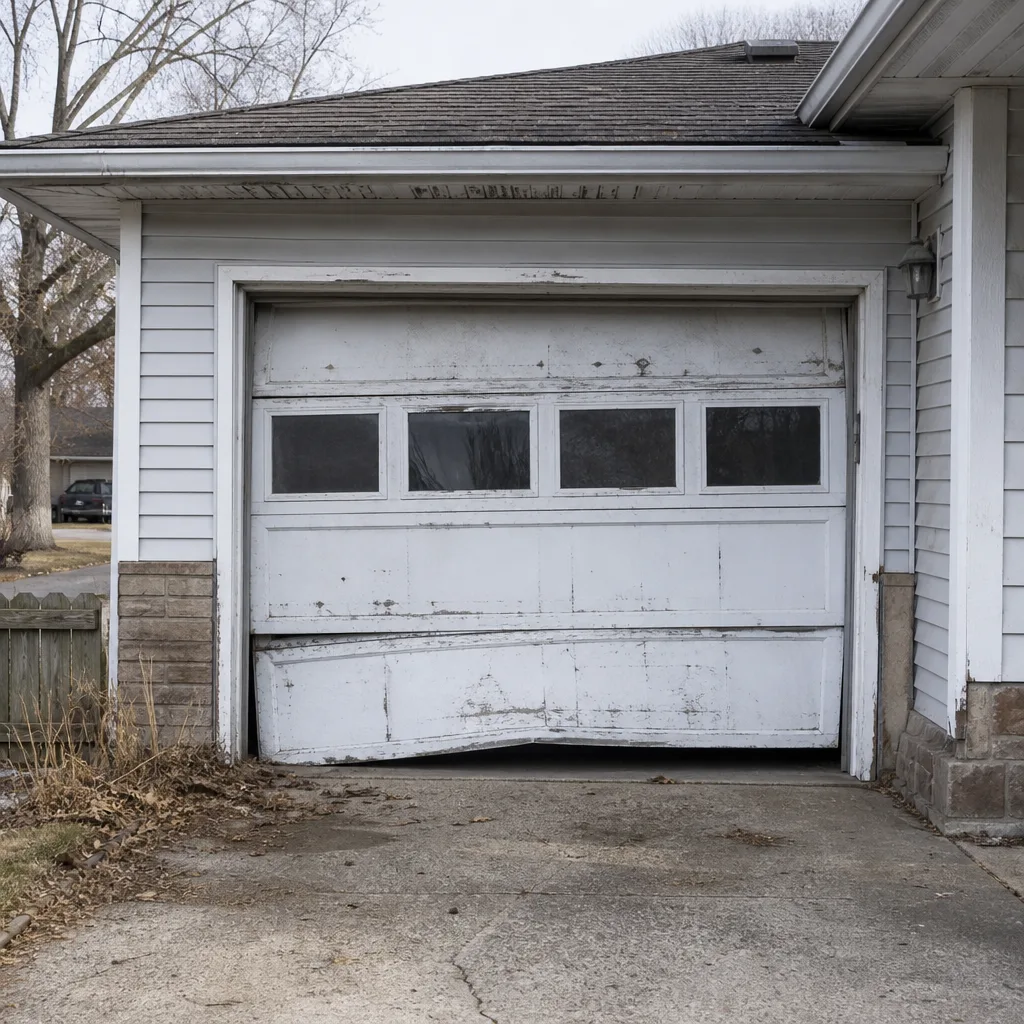 Before
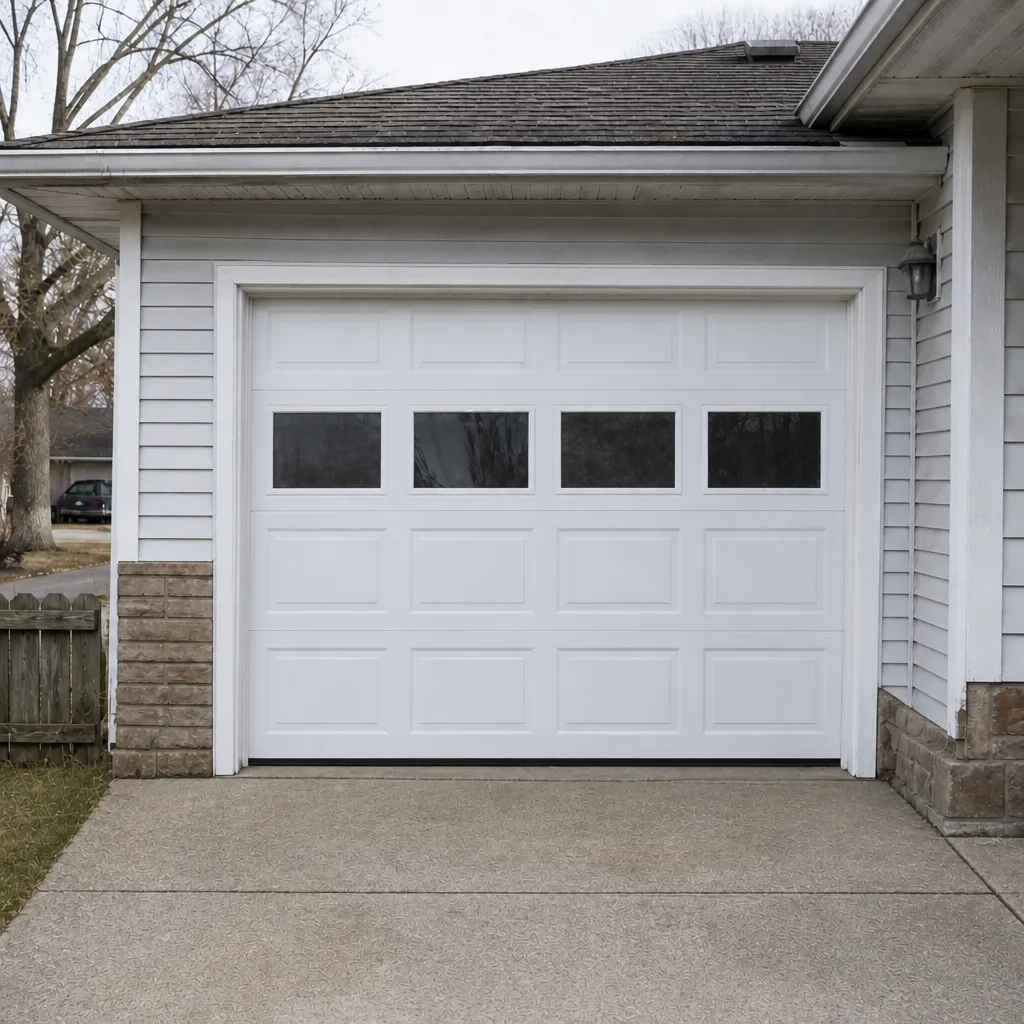 After
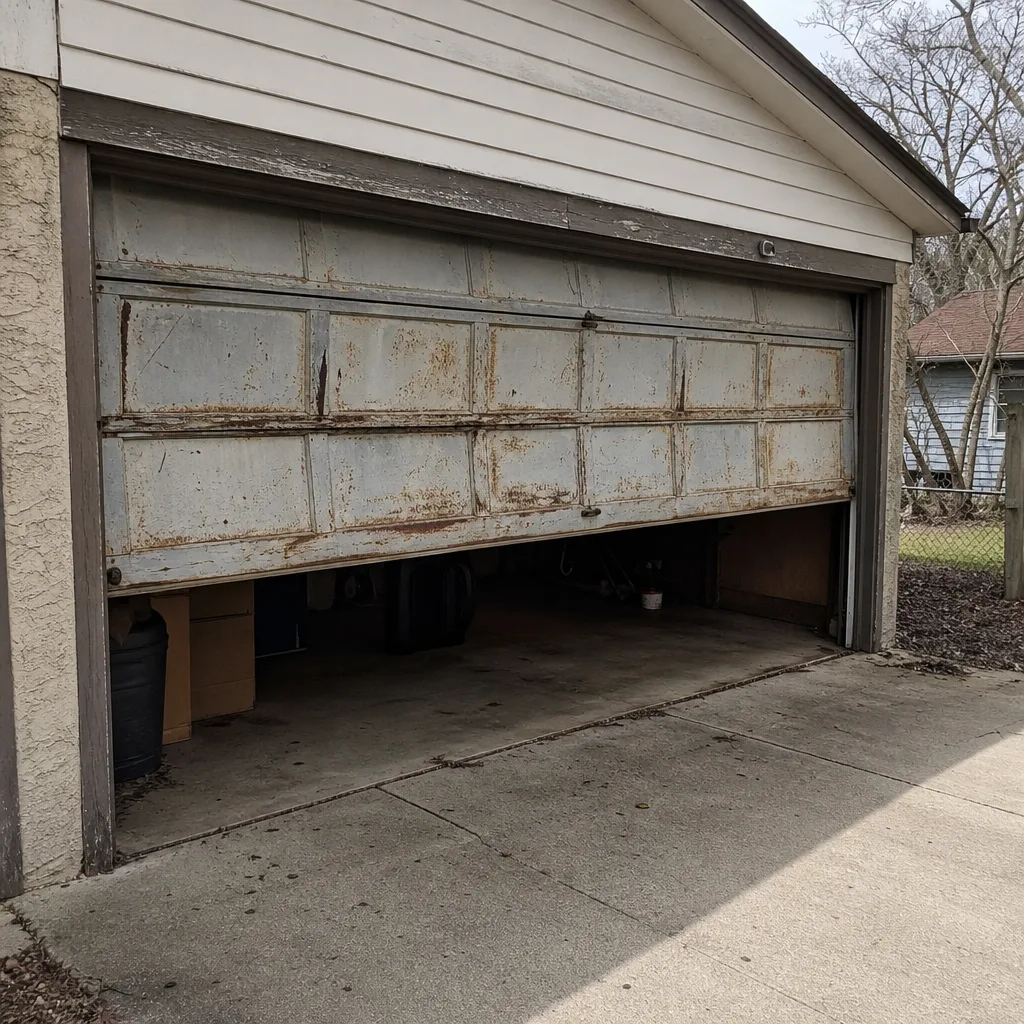 Before
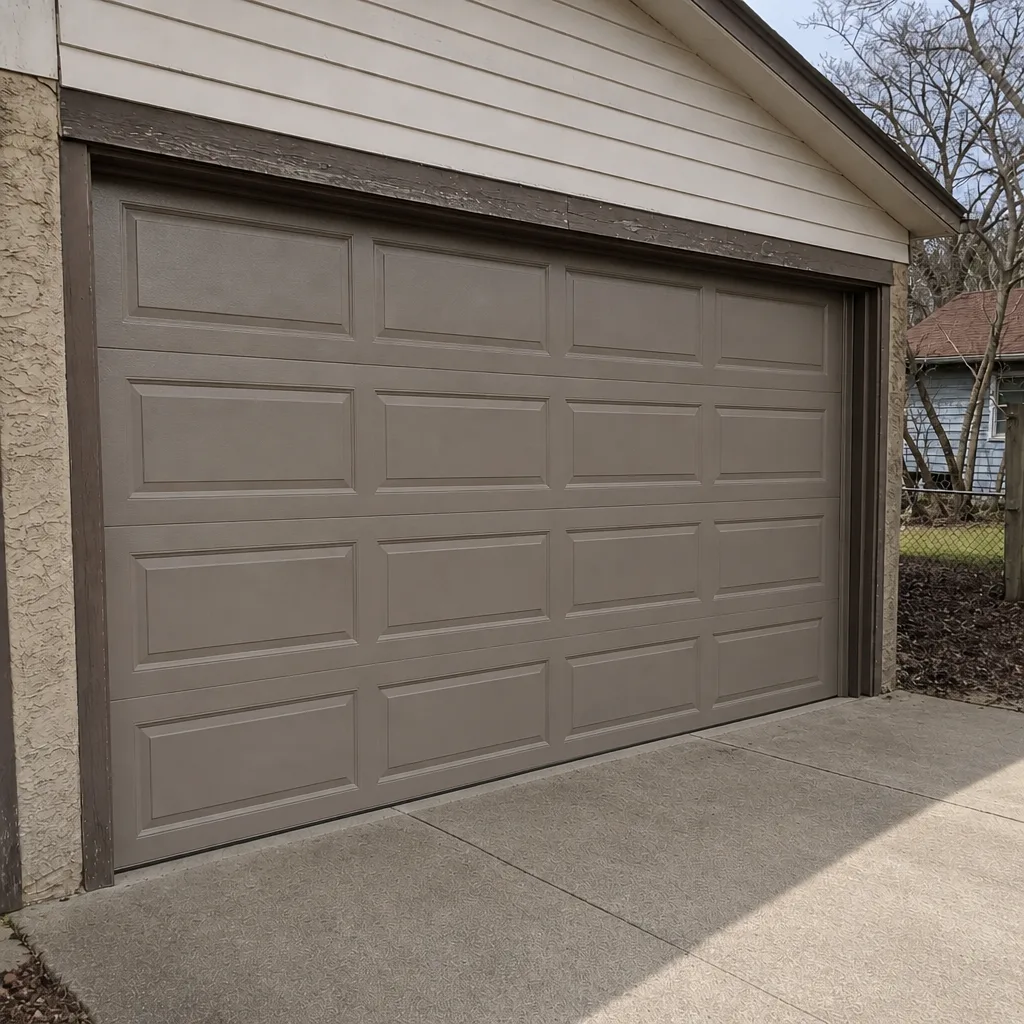 After
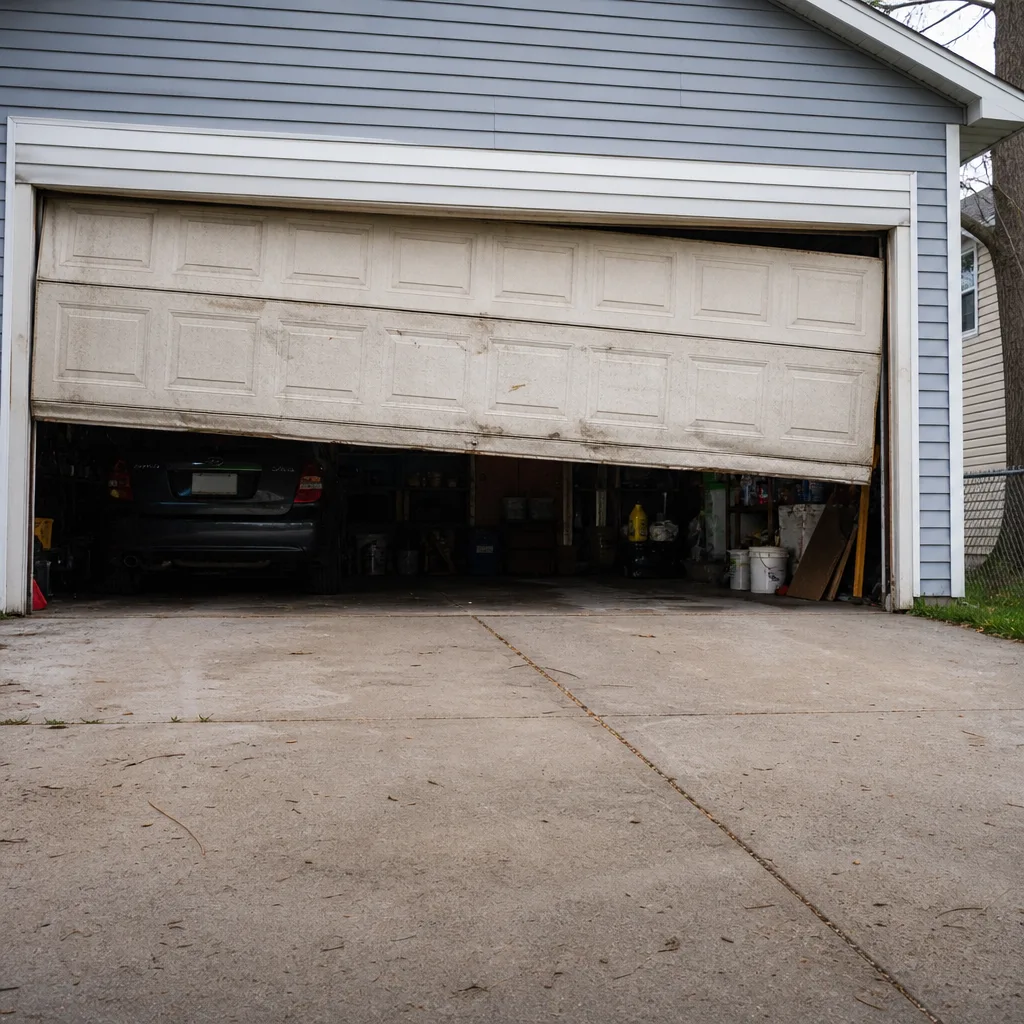 Before
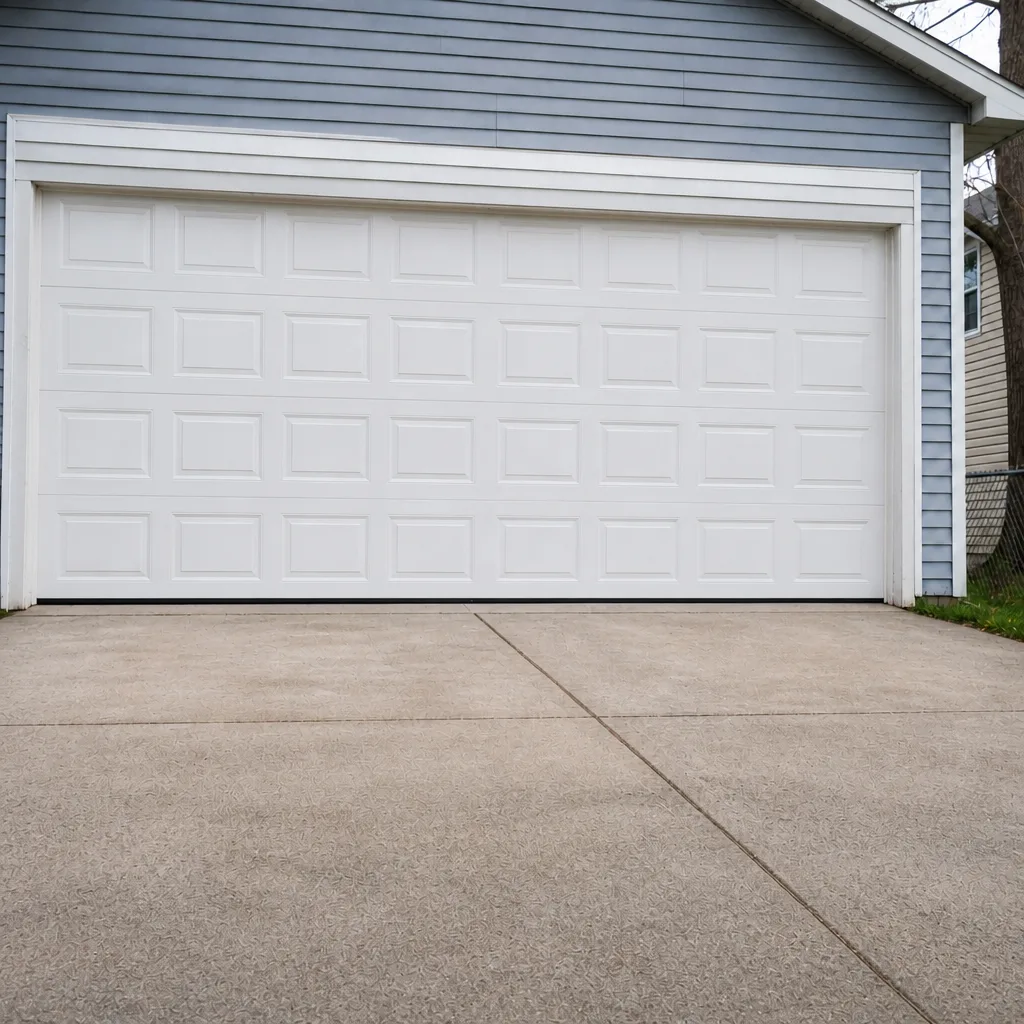 After
When to Call a Professional
Call a professional when the door won’t open or close on command, when you hear a loud snap from the garage, when the door feels heavy or stops partway, or when a visual check turns up a cracked seal, a drifting track, or a panel that looks bowed. Springs and opener internals are the two areas where a DIY attempt can put you in real danger – a torsion spring under tension can cause serious injury, and wiring on an opener deserves a trained hand. Leave those alone. Harvest Garage Door Repair offers free estimates in St. Paul – call (888) 270-3708. We work on the brand you already have, garage doors are all we do, and our technicians have up to 8 years of experience. We answer 24/7, with fast dispatch from 7am to 7pm.
Frequently Asked Questions
The exact cost depends on what’s wrong, because the written estimate sets the price before any work starts. Spring repair is typically priced per spring and usually done as a matched pair, so a pair costs about twice a single-spring figure. Seal, track, and opener repairs are quoted per job. Call (888) 270-3708 for an exact quote – estimates are free.
Same-day service is often possible for repair calls, and our phone line is answered 24/7. Fast dispatch runs 7am-7pm, Sunday through Friday. Call (888) 270-3708 and we’ll get you booked in the next opening.
Yes. We work on the brand you already have – LiftMaster, Chamberlain, Genie, Clopay, Amarr, Wayne Dalton, Craftsman, and Raynor – so you’re never told your system needs replacing because of brand limitations. Call (888) 270-3708 for an exact quote – estimates are free.
Measure the opening width and height at three points each – top, middle, and bottom for width, left, center, and right for height. If the numbers differ, the opening is non-standard or out of square, which is common in pre-1960 St. Paul homes. Take the largest numbers and order to those. Call (888) 270-3708 for a free measure.
No. The price is quoted and agreed before any work starts, and the written estimate sets the final price. If a job turns out to be more involved, we tell you before proceeding rather than surprising you with a bigger invoice. Call (888) 270-3708 for an exact quote – estimates are free.
Our technicians are trained on the brands we service, insured, and experienced with garage doors specifically – garage doors are all we do, so every technician’s field experience is relevant to your job. Our technicians have up to 8 years of experience. Call (888) 270-3708 to talk about your door.
The Bottom Line
Garage doors in St. Paul face pressures that generic guides miss: freeze-thaw rather than simple cold, century-old homes with non-standard openings, and a humidity swing that punishes the wrong materials. Measure before you buy, choose durability over appearance, keep an eye on the bottom seal through the freeze-thaw season, and treat a “wrong brand” diagnosis with suspicion. A brand-fluent specialist can usually tell the difference between a real failure and an installation error, and fixing the right problem is always cheaper than replacing the wrong part. For anything touching springs or opener internals, leave it to a trained professional.
If you’re ready to get your door sorted, call (888) 270-3708 for a free estimate. We answer 24/7, with fast dispatch from 7am to 7pm, Sunday through Friday. You’ll get a written price you agree on before any work starts, on the door, the opener, or both. You can also start by ordering a St. Paul service visit, and we’ll take it from there.
Written by the team at Harvest Garage Door Repair.