
Last updated November 15, 2026
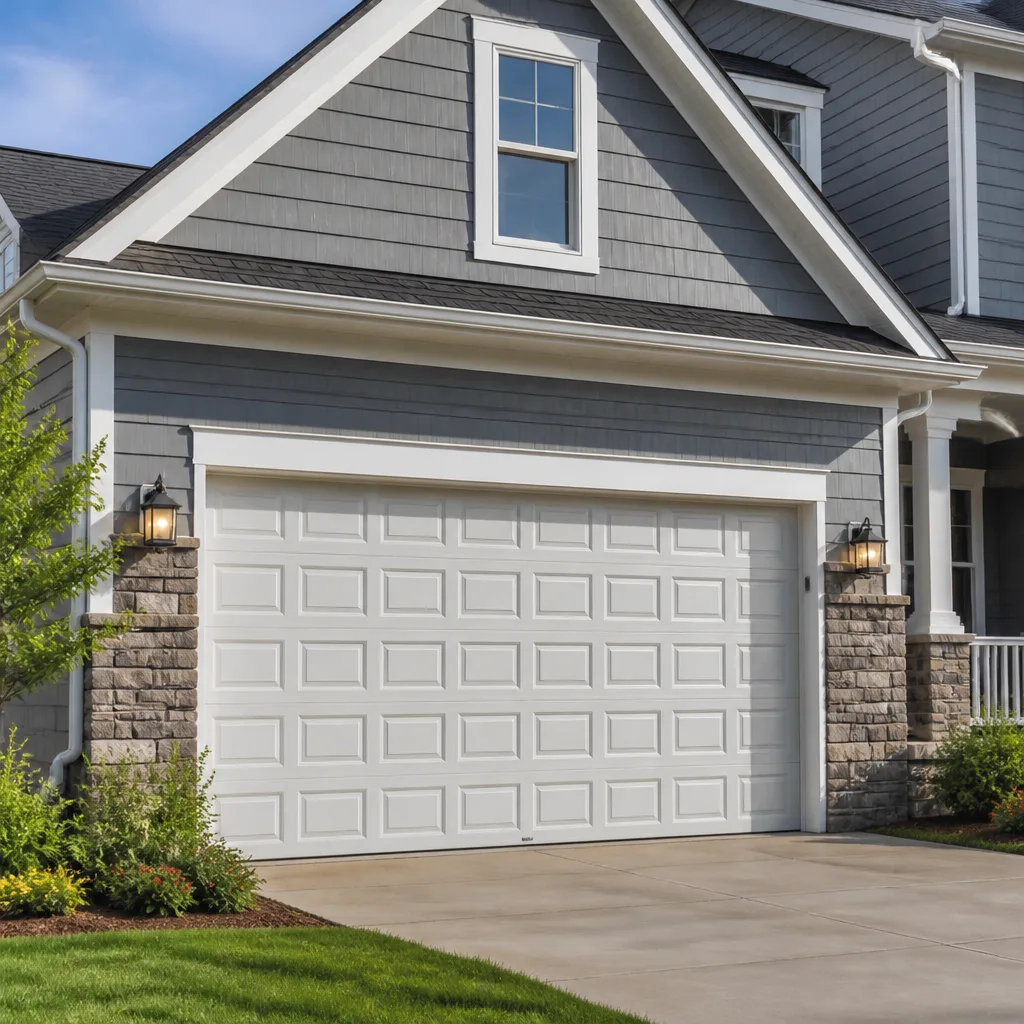 Raised-panel steel
 Carriage house
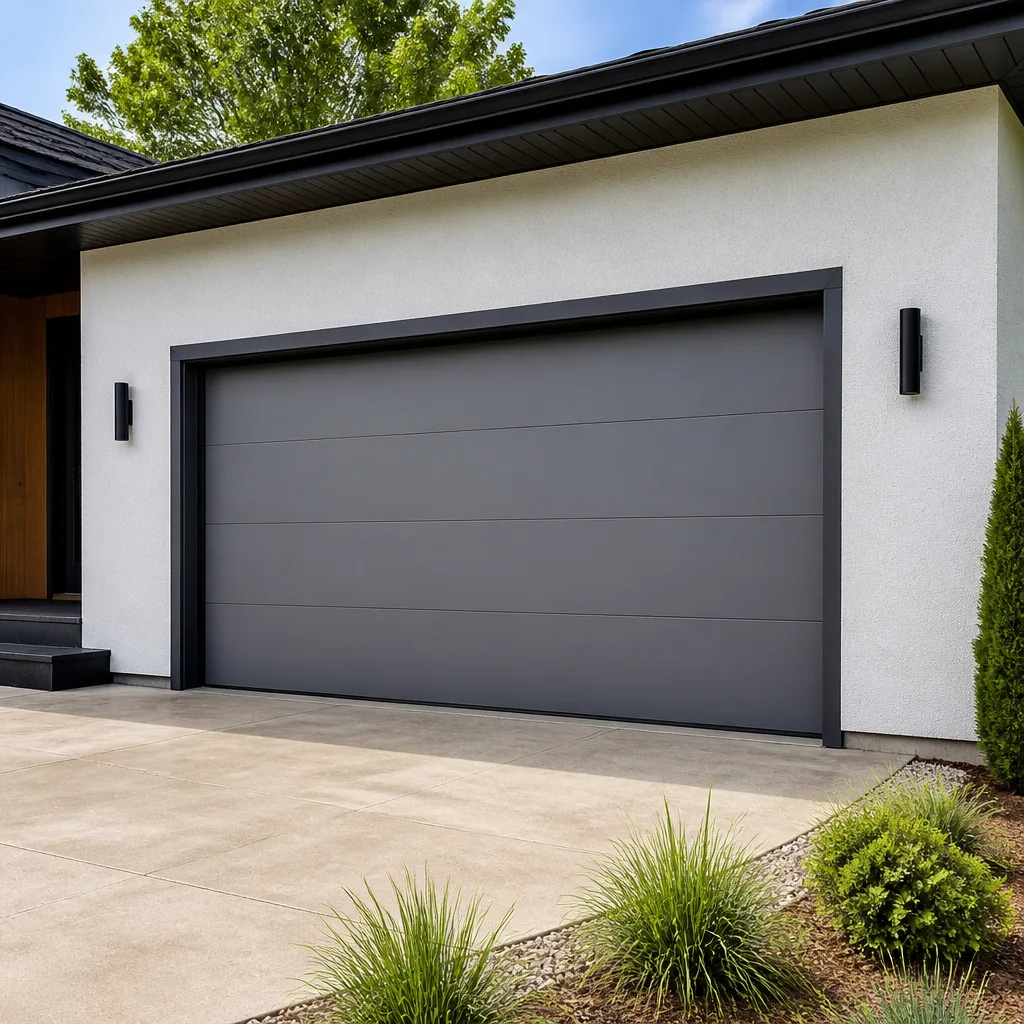 Modern flush
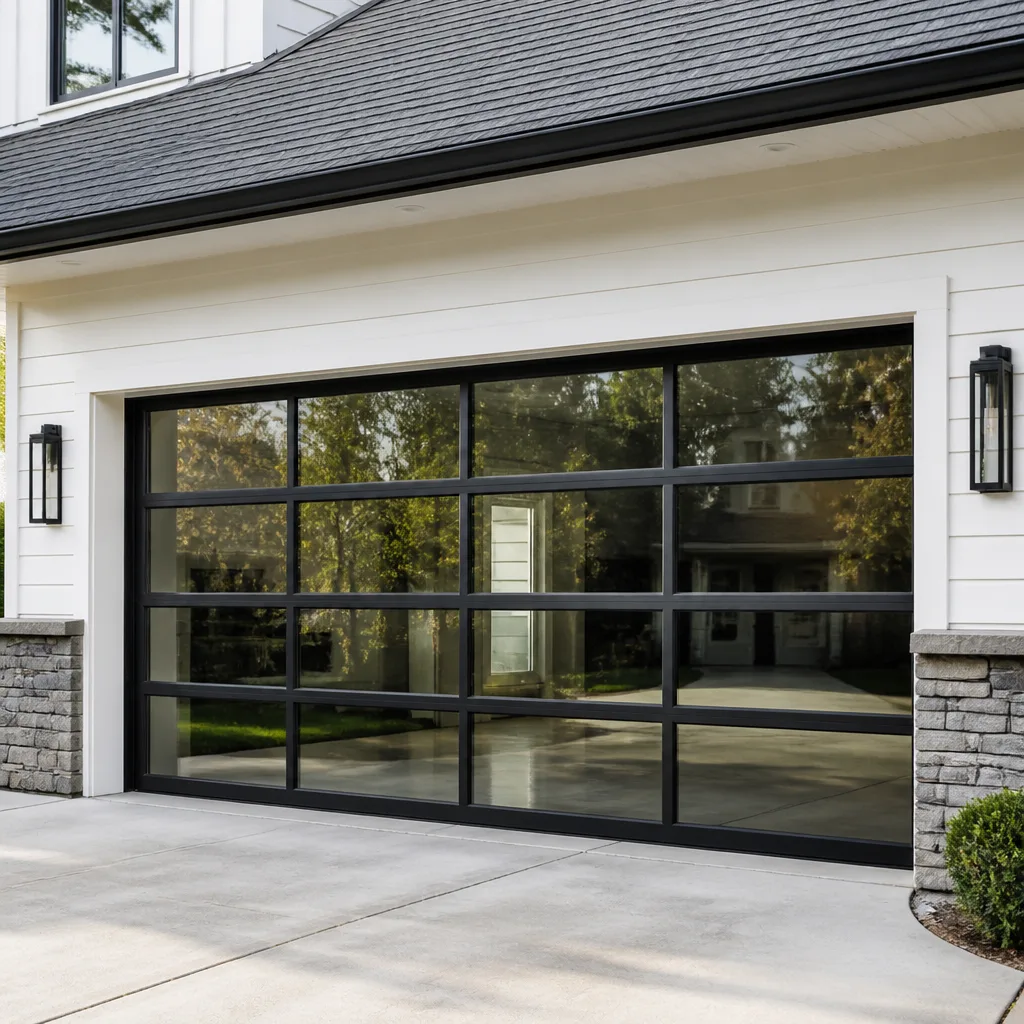 Full-view glass
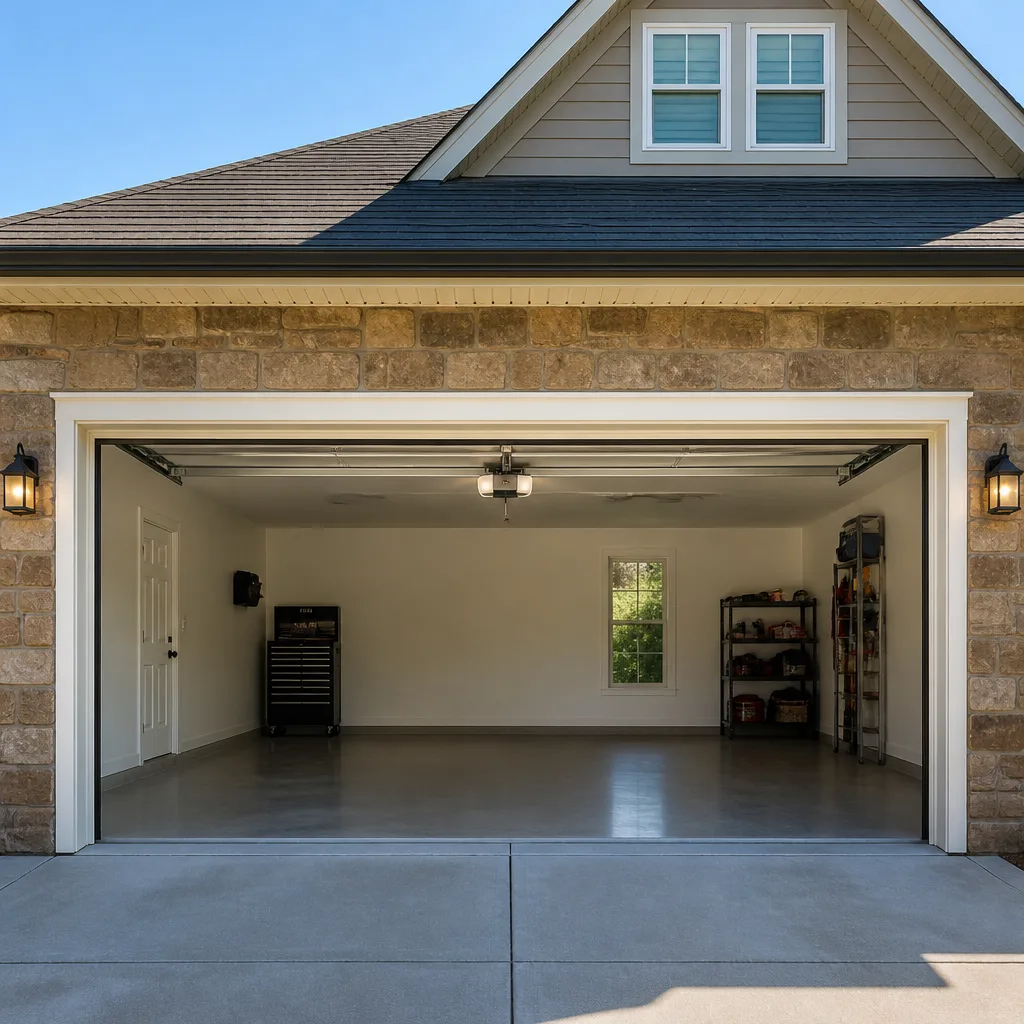 LiftMaster openers
 Chamberlain openers
Full 25-point door and opener safety check with every visit - springs, cables, rollers, tracks, and your LiftMaster or Chamberlain opener included
You get a price before we start. It does not change when the pro arrives.
Get your free estimateGarage Door Repair Maintenance Checklist for St. Paul Homeowners
Most garage door maintenance checklists recycle the same seven generic items: oil the springs, listen for noise, check the weather seal. National lists leave out the thing that actually kills doors in Minnesota. In our experience, the number-one cause of premature spring failure here isn’t age or cycle count. It’s spring tension that was set correctly in July and never recalibrated once the cold weight of winter settled into the door. That July adjustment and that November reality are two different numbers. This guide is a maintenance checklist built backward from real, frequently seen failures in St. Paul homes. Every item is here because skipping it costs money. You’ll get a task list organized by how long each job takes, so you can actually use it.
Quick Answer
A garage door maintenance checklist for St. Paul should focus on four things in this climate: spring tension recalibration in late fall, hinge and bottom-bracket cleaning to remove road salt and brine, feeler-gauge track-gap checks after frost heave, and an annual opener force-limit test before temperatures drop. A basic 2-minute monthly visual check plus one professional visit per year covers most homes. The rest of this guide breaks down exactly how and when to do each one.
Styles & brands we work with
- Raised-panel steel
- Carriage house
- Modern flush
- Full-view glass
- LiftMaster openers
- Chamberlain openers
Table of Contents
- Why a St. Paul Checklist Looks Different From a National One
- The 2-Minute Monthly Checks
- The 10-Minute Seasonal Tasks
- Spring Tension Recalibration: The Mistake Nobody Warns You About
- Salt and Road Brine Corrosion on Brackets and Hinges
- Track Gap Inspection With a Feeler Gauge
- Opener Force-Limit Testing Every Fall
- The Annual Professional Visit: What We Actually Look At
- Common Mistakes to Avoid
- When to Call a Professional
- Frequently Asked Questions
Why a St. Paul Checklist Looks Different From a National One
A garage door in Phoenix and a garage door in St. Paul share the same basic components. They don’t share the same failure timeline. Minnesota’s specific mix of wet, freezing, thawing, refreezing, and winter road treatment creates a maintenance calendar that generic checklists just don’t address.
Three forces are at work here. First, temperature swing. A St. Paul garage door cycles from summer highs in the 80s to repeated hard freezes through January and February, sometimes inside the same week. Structures move with that. Door panels flex. Tracks shift. Spring tension that was correct in July is measurably off by November because the door’s weight and the metal’s stiffness have both changed.
Second, road treatment. St. Paul plows and treats its streets with salt and brine. That treatment tracks into garages on tires within days of the first storm. It sits on floor-level hardware: bottom brackets, hinges, the lower roller shafts. Left on metal, it speeds corrosion in exactly the parts that carry the most load.
Third, frost heave. Ground movement under and around a garage slab shifts the track assembly in ways that are invisible from standing height. You need a tool to catch it, not just your eyes.
If your door is already showing symptoms, our garage door repair team can look at the whole system and tell you what’s actually wrong, not just what’s easiest to sell. But most of what’s in this guide, you can check yourself. Let’s start with the 2-minute list.
The 2-Minute Monthly Checks
These are the tasks most homeowners can do in the time it takes coffee to brew. Do them once a month, ideally on the first weekend. They catch problems while they’re still cheap to fix.
- Look at the floor under the door. Any debris, oil spots, or metal shavings tell a story. Shavings usually mean a failing component is grinding against another.
- Run the door up and down once. Listen. A healthy door makes a consistent, low hum. Grinding, popping, or a periodic scrape are warnings.
- Watch the panels move. If a panel jumps, drops suddenly, or shudders at the same point every cycle, the track or a roller is binding.
- Press the safety reverse button. If the door doesn’t reverse when it hits a test object, the sensor system needs attention before anyone gets hurt.
- Check the photo-eye alignment. Two small lights at the base of the tracks should be solid, not blinking. A blinking light means misalignment or a blocked path.
- Test the manual release. Pull the red cord and make sure the door moves freely on its track. This should be easy. If it feels heavy, the spring is doing less than its job.
If the release cord feels stiff or the door won’t hold itself up when released halfway, stop using the automatic opener and have the spring or balance checked. That’s a signal, not a nuisance.
The 10-Minute Seasonal Tasks
These are the quarterly jobs, best done right before fall and again in spring. Ten minutes each, done four times a year, keeps a door from aging prematurely.
- Lubricate hinges and roller bearings with a garage-door-specific spray, not WD-40. Check the operator manual or the opener brand’s recommendation. If your hardware is LiftMaster or Chamberlain, standard lithium grease or silicone spray is the right choice. For a Craftsman opener’s chain drive, use a chain-specific lubricant.
- Wipe down bottom brackets and hinges on any door facing a plowed street. Use a damp cloth and follow with a light spray lubricant. This is your salt-defense step, covered below.
- Check the weather seal at the bottom edge. Frosty mornings will show you where cold air gets in. A hardened or cracked seal lets water pool at the bottom panel, which is where rot and paint failure start.
- Check the vertical track bolts with a wrench. Loose bolts happen more often here than in warmer climates because of freeze-thaw movement. Finger-tight is wrong. They need a proper snug fit.
- Inspect the torsion spring windings for rust. In St. Paul, this matters more than most places. Surface rust on a spring is a slow signal that moisture is getting in.
- Run the force-limit test on the opener. Instructions are in the opener’s manual. We cover the reason it’s critical in a later section.
These tasks won’t stop a spring from failing at the end of its cycle life. Nothing does. But they’ll catch every avoidable problem before it starts.
Spring Tension Recalibration: The Mistake Nobody Warns You About
Direct answer: In St. Paul, spring tension that was set in July is typically wrong by November because both the door’s weight (water absorption, cold contraction of the metal) and the spring’s stiffness change with temperature. Torsion springs become stiffer in cold, meaning the same door becomes harder for the spring to lift. The fix is a tension check by a trained technician in late fall, not a homeowner adjustment.
Here’s why this matters. Torsion springs are calibrated to a specific door weight. A door and its springs are tuned together as a system. When temperatures drop from summer levels to repeated freezes, two things happen at once. The metal of the door panels contracts and stiffens slightly, and the torsion spring itself gains resistance. Net result: the spring is doing more work than it was sized for. That extra work is what wears the spring out early. Cycles aren’t the only wear factor. Load per cycle is.
Signs your tension needs a cold-season check:
- The door feels noticeably heavier when you pull the manual release than it did in summer.
- The opener seems to strain on the first cycle of the morning.
- You hear a “bang” or snap on the last few inches of closing.
- The door bounces slightly at the top of its travel instead of stopping cleanly.
- The opener’s force setting was manually increased at some point in the past and never reset.
This is not a do-it-yourself task. Torsion springs store enough energy to cause serious injury in a fraction of a second. They must be adjusted with the correct winding bars, safety equipment, and knowledge of the door weight. Our technicians handle spring adjustment and replacement as routine work, and we’ll tell you plainly if the spring is near end of life or just out of calibration. If you’re seeing a snapped spring, that’s garage door repair territory, not maintenance, and it needs attention right away.
Late October is the right time for this check in St. Paul. It catches the tension before the first hard freeze arrives.
Salt and Road Brine Corrosion on Brackets and Hinges
Direct answer: Homes near plowed streets should wipe down bottom brackets, hinges, and lower roller shafts monthly through the winter and clean with fresh water immediately after any heavy brine exposure. Salt and brine accelerate corrosion on these load-bearing parts far faster than normal weather exposure, so the parts that hold the door together rust first.
St. Paul treats its streets heavily through the winter months. The spray that comes off a plow truck or a brine application tracks into the garage on tires within days of the first snowfall. It settles on the lowest hardware: bottom brackets, the bottom hinge, the lower roller shafts, and the door’s bottom section skin.
Why does this matter for your door’s lifespan? Those are the parts carrying the most load. A corroded hinge stops pivoting smoothly. Then it creaks. Then the panel attached to it starts to fight the movement and eventually cracks or warps. A rusted bottom bracket can weaken to the point of not holding the bottom roller properly.
What to do, in order of effort:
- Monthly wipe-down, November through March. A damp cloth, a little water, and a quick wipe on each bottom bracket and hinge. Thirty seconds per piece.
- Fresh-water rinse after any visible brine spray on the door. Not a pressure wash. A garden hose rinse with the door closed and dripping dry.
- Light lubricant spray on cleaned hinges and pivot points. Avoid heavy grease, which holds grit and makes things worse.
- Annual inspection of the bottom brackets and lower hinges for pitting, flaking paint, or free-moving rust.
Cold-climate doors on plowed streets will show the wear first. If your garage faces the street in a St. Paul neighborhood like Highland Park or the North End, plan for the wipe-down as a winter routine.
If you’re not sure whether the corrosion you’re seeing is cosmetic or structural, that’s a free-estimate call.
Track Gap Inspection With a Feeler Gauge
Direct answer: A visual check of the vertical track is not enough in Minnesota, because frost heave shifts the track slightly in ways you can’t see but your door will feel. Use a feeler gauge to check that the gap between the track and the roller is consistent along the full run of both sides. Any spot where the gauge fits less easily than everywhere else is a bind point.
Frost heave is the quiet enemy of a St. Paul garage door. When the ground under and around the garage slab freezes and thaws repeatedly, the earth shifts. It moves the track’s vertical anchors by fractions of an inch. Your eyes can’t catch a gap that shifts a few thousandths. Your door feels it every single cycle.
The feeler gauge method:
- Close the door and stand at eye level beside one vertical track.
- Slide a feeler gauge of the appropriate thickness between the track and the roller stem at three points: top, middle, bottom.
- Repeat along the full vertical run. Note any spot where the gauge won’t slide in or fits much more loosely.
- Do the same on the opposite side.
- If any single stop along the run has a noticeably tighter or looser gap, that’s a shifted or misaligned track. It’s not a “wait and see” problem.
If you don’t own a feeler gauge, a simple alternative is to note the sound of the door running one cycle. A door that suddenly creaks, scrapes, or binds at the same point every cycle is telling you a track has moved. That’s a free-estimate call as well, because a bad track accelerates roller wear and can twist the door panel.
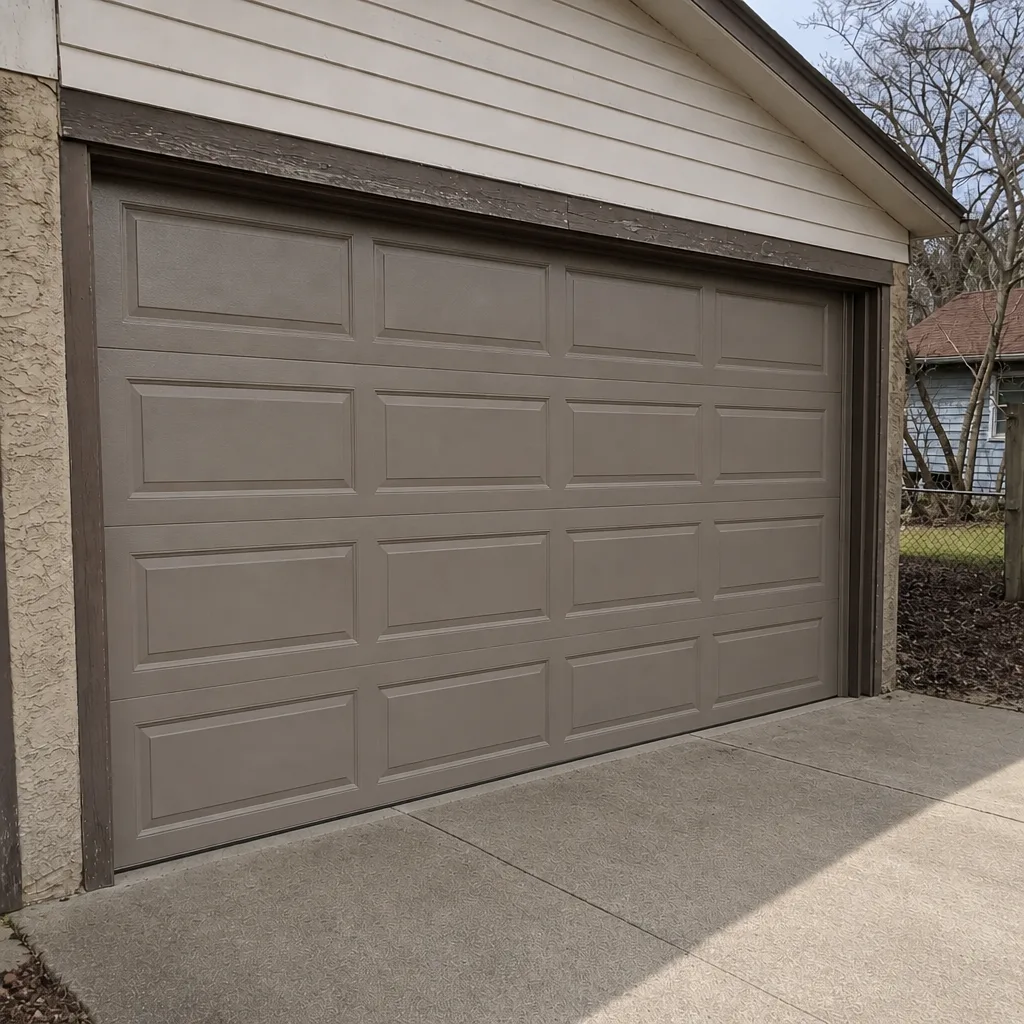
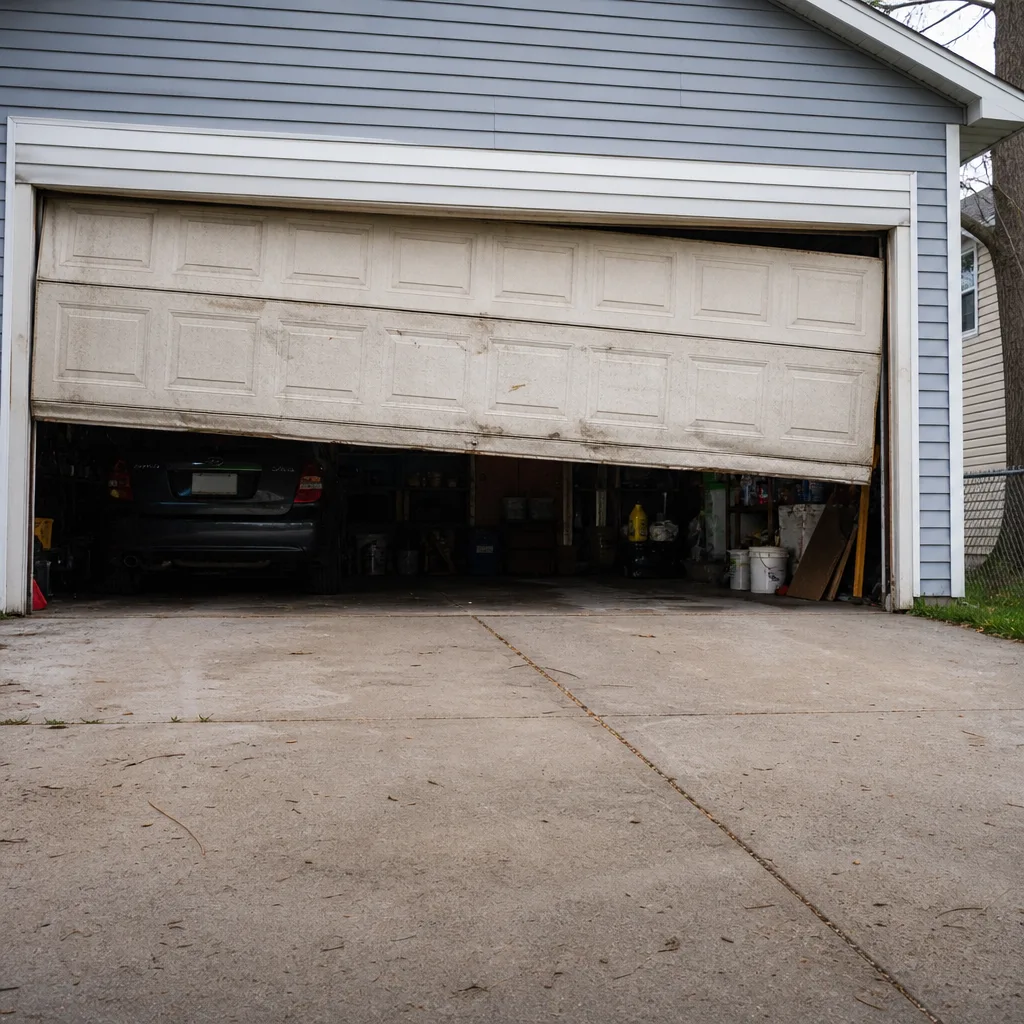
See the difference
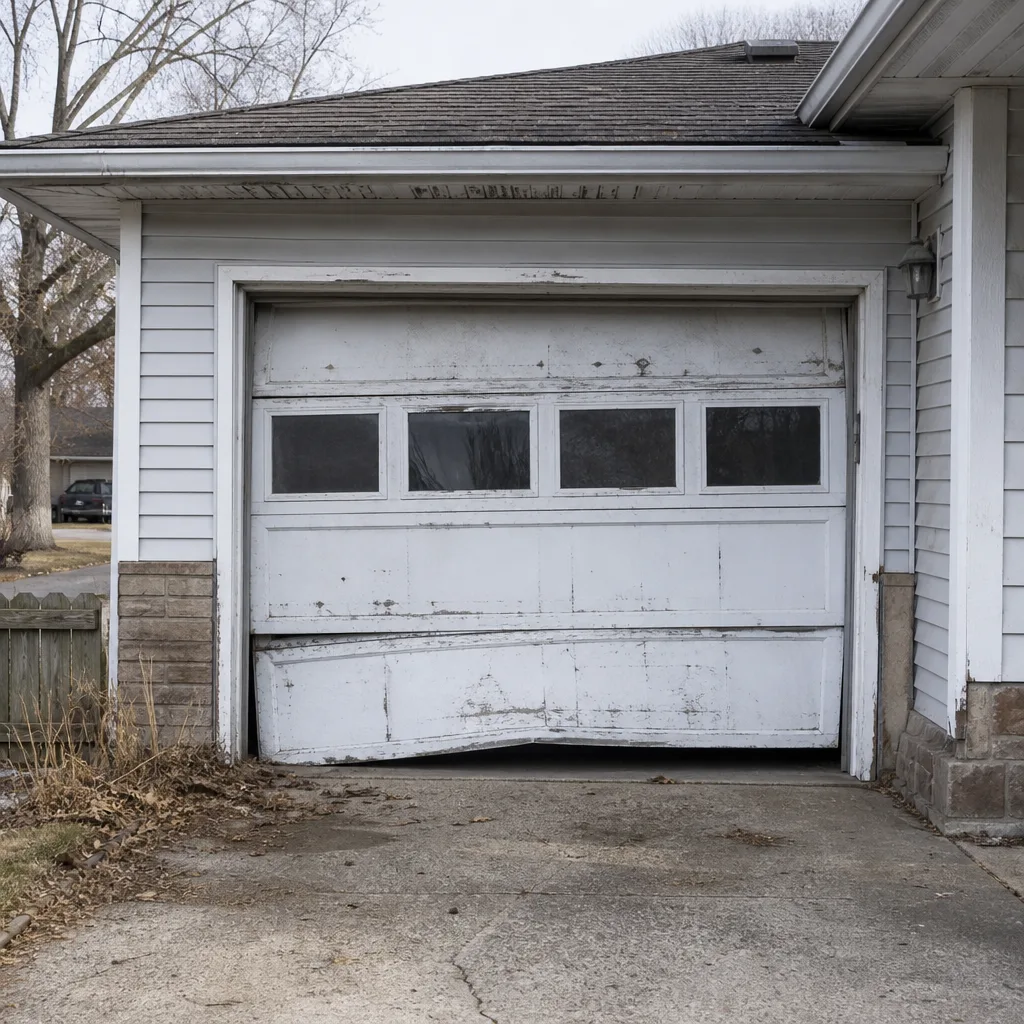 Before
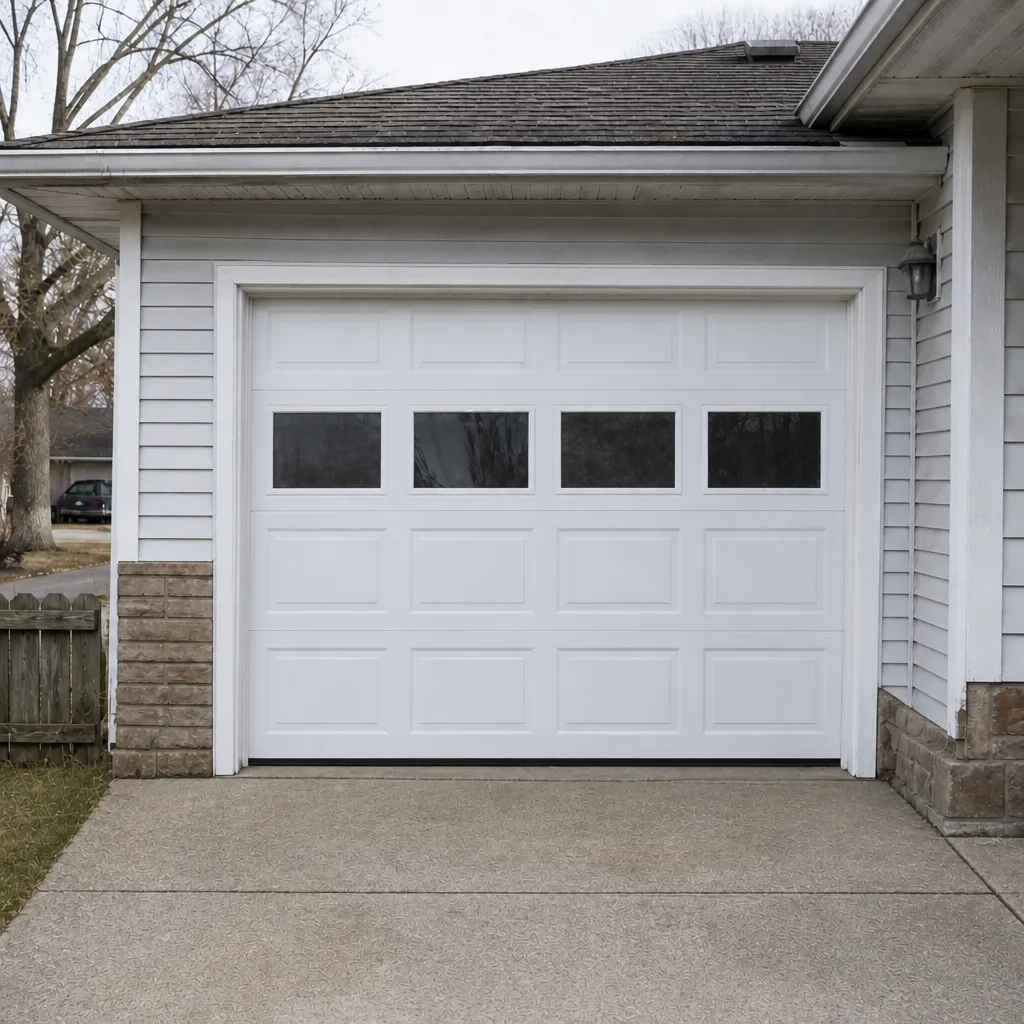 After
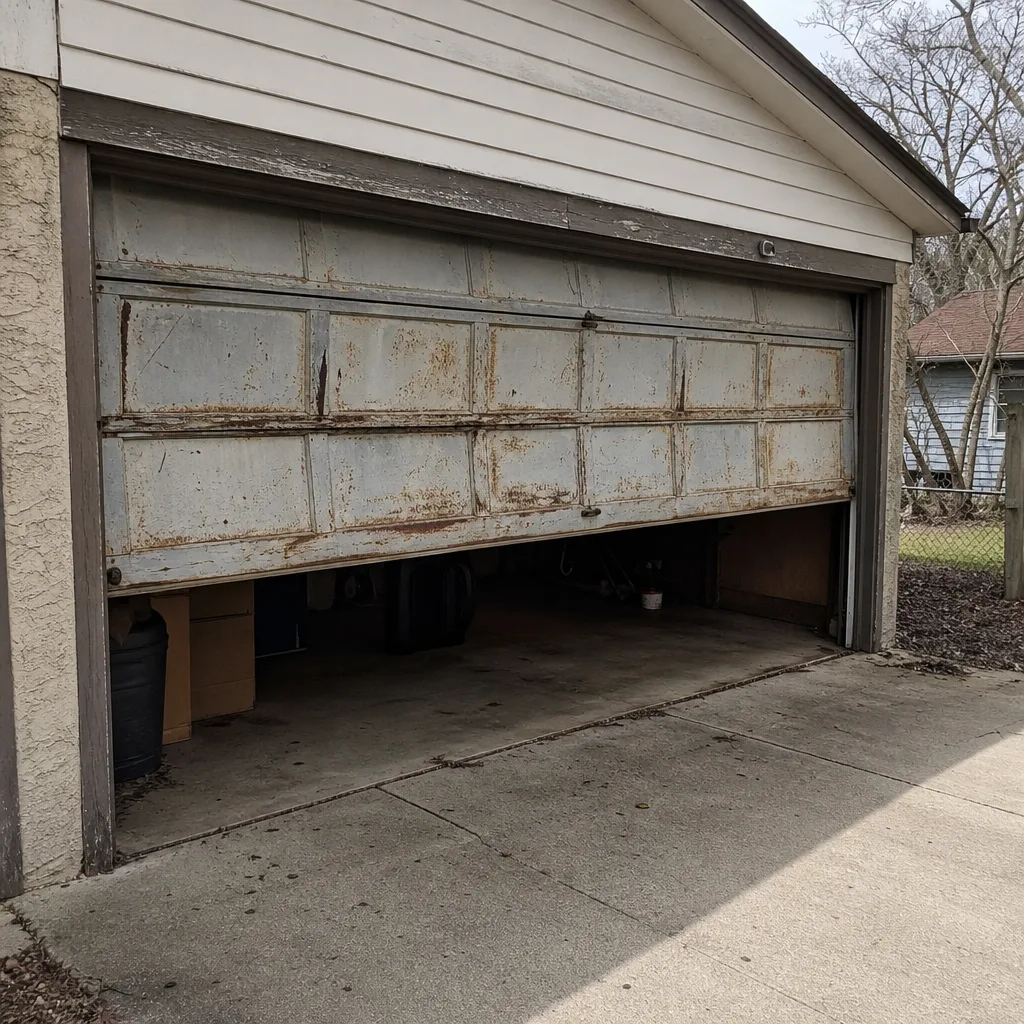 Before
 After
 Before
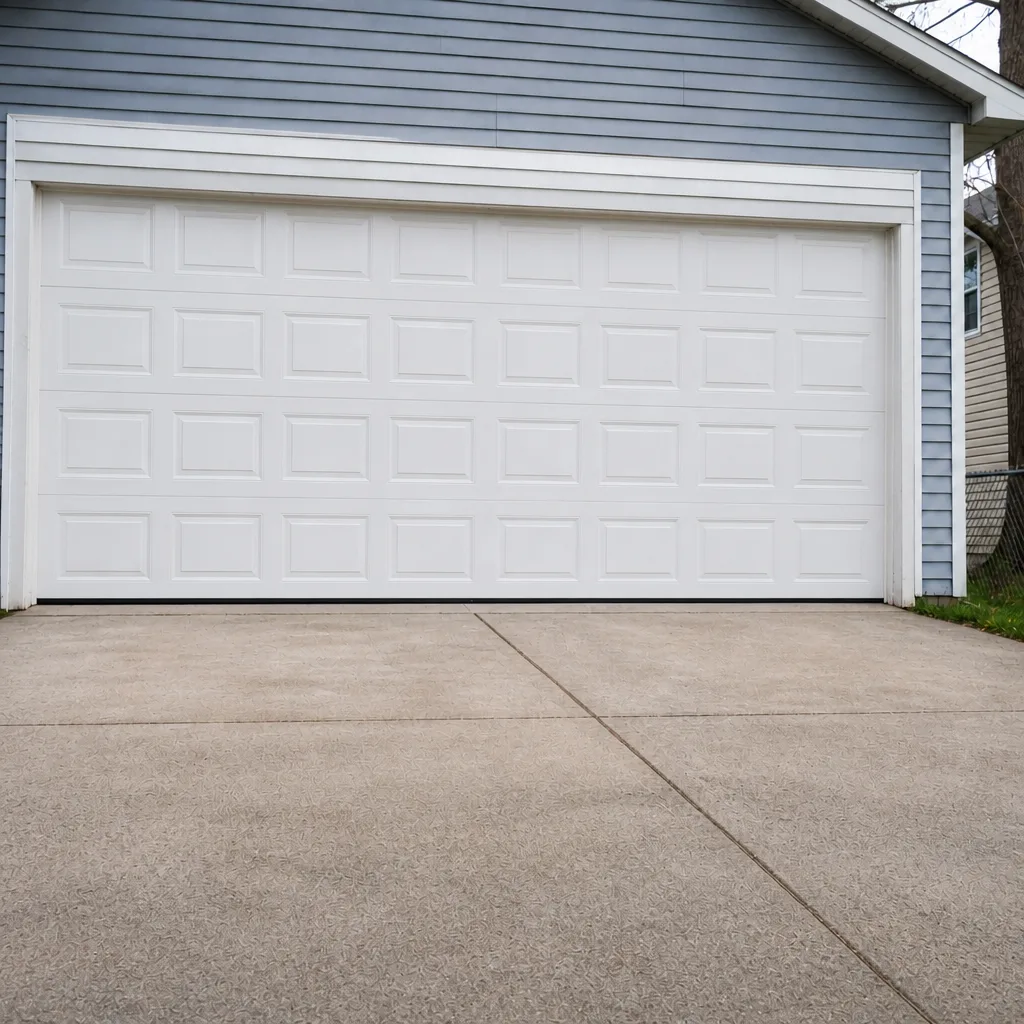 After
Opener Force-Limit Testing Every Fall
Direct answer: The opener’s force-limit setting tells the motor how hard to push against resistance before it stops and reverses. It should be tested every fall before temperatures drop because cold makes the door heavier to lift, and an opener set at the summer setting will work harder than it should all winter. That extra strain is a top cause of premature burnout in cold climates.
The force limit is a safety feature. It also determines how much work the motor does per cycle. If the force limit is set to a threshold that was appropriate in July and the door gets heavier in December, the opener works closer to its limit for months. The motor runs hotter, the gears wear faster, and eventually the opener fails on the coldest morning of the year.
If your opener is a LiftMaster, Chamberlain, or Craftsman, the force adjustment procedure is in the manual, usually behind the light lens or under a small cover. The step-by-step:
- Disconnect the door from the opener with the manual release.
- Run the door by hand, top to bottom. It should open and close smoothly with one hand.
- Reconnect the door and test one full cycle.
- Use the manual’s test procedure to check the reverse-on-contact and reverse-on-obstruction features.
- If the opener strains on the first cycle of a cold morning or reverses without reason, the force limit or the door’s balance needs professional attention.
We think of opener work as its own discipline, not a footnote to door repair. That’s why we treat garage door opener repair as a full service line. Force-limit testing, sensor alignment, and drive-system wear are all part of the yearly check our technicians run.
One more thing on smart openers. If you have a lift app on your phone, use it to catch drift. A door that now takes two button presses to close used to take one. That’s a force-limit signal.
The Annual Professional Visit: What We Actually Look At
The tasks above are homeowner work. Once a year, they should be paired with a full professional inspection. Here’s what that means in practice, and why it’s different from a generic tune-up.
When we do our annual check, we look at the full system in order of failure risk:
- Springs: tension calibration, cycle counter estimate, surface corrosion, and whether the door is still properly balanced on the spring alone.
- Cables: fraying at the drum, slack, and drum seating. Cables under load are as dangerous as springs.
- Rollers: bearing wear, flat spots, and whether any roller has lost its seal.
- Tracks: vertical and horizontal alignment, anchor tightness, and gap consistency on both sides.
- Hinges and brackets: corrosion, pivot smoothness, and any evidence of load-bearing fatigue.
- Opener: force limit, sensor function, drive-system condition, and any error codes stored in the unit.
- Bottom seal and panel edges: the parts that decide how much water and cold get in.
- Safety reverse system: tested with the correct test weight and photo-eye alignment re-checked.
We work on the equipment that’s actually on your door. That includes LiftMaster, Chamberlain, Genie, Clopay, Amarr, Wayne Dalton, Craftsman, and Raynor. If your door is a Raynor or Amarr system installed years ago, or a Clopay panel with a Genie opener, our technicians are trained to work on the brand you already have, not to talk you into a replacement because they don’t support it.
Garage doors are the only trade we work in. That means every technician’s field experience is 100% relevant to every job. Our technicians have up to 8 years of experience. When they’re diagnosing a door in St. Paul, they’re not learning a new trade on your door. They’re applying the same discipline every day.
If you’re looking for a single point of contact for the full lifecycle of your door system, our team at Harvest Garage Door Repair can handle repair, opener repair, and full installation when a door’s time is up. Our St. Paul guide has neighborhood-specific notes if you want a starting point.
Common Mistakes to Avoid
- Setting spring tension in summer and never recalibrating. In Minnesota, a July calibration is wrong by November because the door’s weight and the spring’s stiffness both change with temperature. This is the mistake we see most, and it shortens spring life substantially.
- Using WD-40 on hinges and tracks. It’s a solvent, not a lubricant. It temporarily quiets a door and then attracts grit and dries out the bearing surfaces. Use a lithium or silicone garage-door lubricant.
- Skipping the fall force-limit test because the door “still works fine.” The opener works fine until it doesn’t, and in St. Paul the day it doesn’t is usually the coldest one of the year. Test it in October, before temperatures drop.
- Doing a visual track check and calling it done. Frost heave moves tracks too slightly for the eye to catch. A feeler gauge takes two minutes and catches what a visual inspection misses.
- Pressure-washing a door on a plowed street to remove winter salt. Pressure washing forces water into the seams that the door’s weather seal is trying to protect. A freshwater rinse and a damp cloth are the correct approach.
- Assuming a noisy door means “the whole thing needs to be replaced.” Most of the time, noise means a roller, hinge, or tension issue that’s far cheaper to fix than a new door. Get a diagnosis before accepting a replacement quote.
- Adjusting torsion springs yourself because YouTube made it look simple. Torsion springs store enough stored energy to cause serious injury in a fraction of a second. This is a professional task on every door, in every climate.
When to Call a Professional
Some symptoms are maintenance notices. Some are stop-now warnings. Call us for any of these: a snapped spring, a door that comes down crooked or sits at an angle, a door that won’t hold itself up when partially open, visible fraying on cables, a door panel that has cracked or separated from its hinges, a motor that hums but doesn’t move the door, an opener that reverses without warning, or any grinding noise that has started recently and keeps repeating. Don’t run the door if you’re unsure. An unbalanced door wears out everything else faster.
Harvest Garage Door Repair offers free estimates in St. Paul. Call (888) 270-3708. We answer 24/7. Fast dispatch from 7am to 7pm, Sunday through Friday. Same-day service is available on repair calls, and every price is quoted and agreed before any work starts.
Frequently Asked Questions
Test it twice a year: once before the cold season in late fall and once in spring. The fall test is the critical one, because a force limit set in summer will be too aggressive for a heavier cold-season door. It takes less than five minutes if your opener manual is handy, and it’s the single best protectant against premature motor burnout. If the opener is older than about a decade or the door feels heavy on manual release, call (888) 270-3708 for a full opener check. Estimates are free.
Typical maintenance visit ranges run from about $95 to $185 for a standard annual inspection, and spring or opener repairs during the visit add to that based on what’s needed. The written estimate sets the final price. That estimate is agreed before any work starts, so there are no surprises when the invoice arrives. Most St. Paul homeowners find that an annual visit plus the seasonal tasks in this guide keeps the door working through the full season at a lower lifetime cost than reactive repairs. Call (888) 270-3708 for an exact quote. Estimates are free.
No. Torsion spring adjustment requires winding bars, correct door-weight knowledge, and the safety equipment to handle stored energy that can release in a fraction of a second. This is a professional task, even for homeowners who are otherwise comfortable with tools. Our technicians handle spring calibration as routine maintenance, not an upsell. If you’re seeing tension symptoms in October or November, call (888) 270-3708. We answer 24/7. Fast dispatch from 7am to 7pm, Sunday through Friday.
For homes near plowed streets in St. Paul, wipe down bottom brackets, hinges, and lower roller shafts monthly through the winter, and rinse with fresh water after any visible brine spray. This is the parts-level cleaning, not the whole door. The reason is that road salt attacks load-bearing hardware first, and those parts are the cheapest to maintain and the most expensive to replace. If corrosion has moved past surface rust, call us for a look. Free estimates in St. Paul.
Usually, yes. Most frost-heave track shifts are anchor-point issues, and the track can be re-seated and re-aligned without replacement. The panel itself is rarely damaged unless the misalignment has been running for many cycles. The key is catching it early with a feeler-gauge check, which is why we put that step in the seasonal list. If a track has twisted, that’s a different job, but it’s diagnosed before any work is agreed. Call (888) 270-3708 for a free estimate.
We service the eight most widely installed door and opener brands on the market, including LiftMaster, Chamberlain, Genie, Clopay, Amarr, Wayne Dalton, Craftsman, and Raynor. If yours is one of these, we can work on it. No one has to talk you into a replacement just because your brand isn’t a brand a technician supports. We work on the equipment you already have. Call (888) 270-3708 to confirm your specific model. We answer 24/7.
The Bottom Line
A St. Paul garage door maintenance checklist is not the same thing as a national one. Three items separate the two: late-fall spring tension recalibration, monthly salt and brine cleaning on load-bearing hardware, and feeler-gauge track checks that catch what frost heave hides from the eye. Add an October force-limit test on the opener, and you’ve covered the failures that actually happen here. The 2-minute monthly checks catch small issues, the 10-minute seasonal tasks keep the system consistent, and the annual professional visit covers what a homeowner can’t safely inspect. Every task on this list is here because skipping it costs more money than doing it.
For an exact quote, call (888) 270-3708. We answer 24/7. Fast dispatch from 7am to 7pm, Sunday through Friday. The estimate is free, and the price is set per job by the written estimate before any work begins.
Written by the team at Harvest Garage Door Repair.