
Last updated November 15, 2026
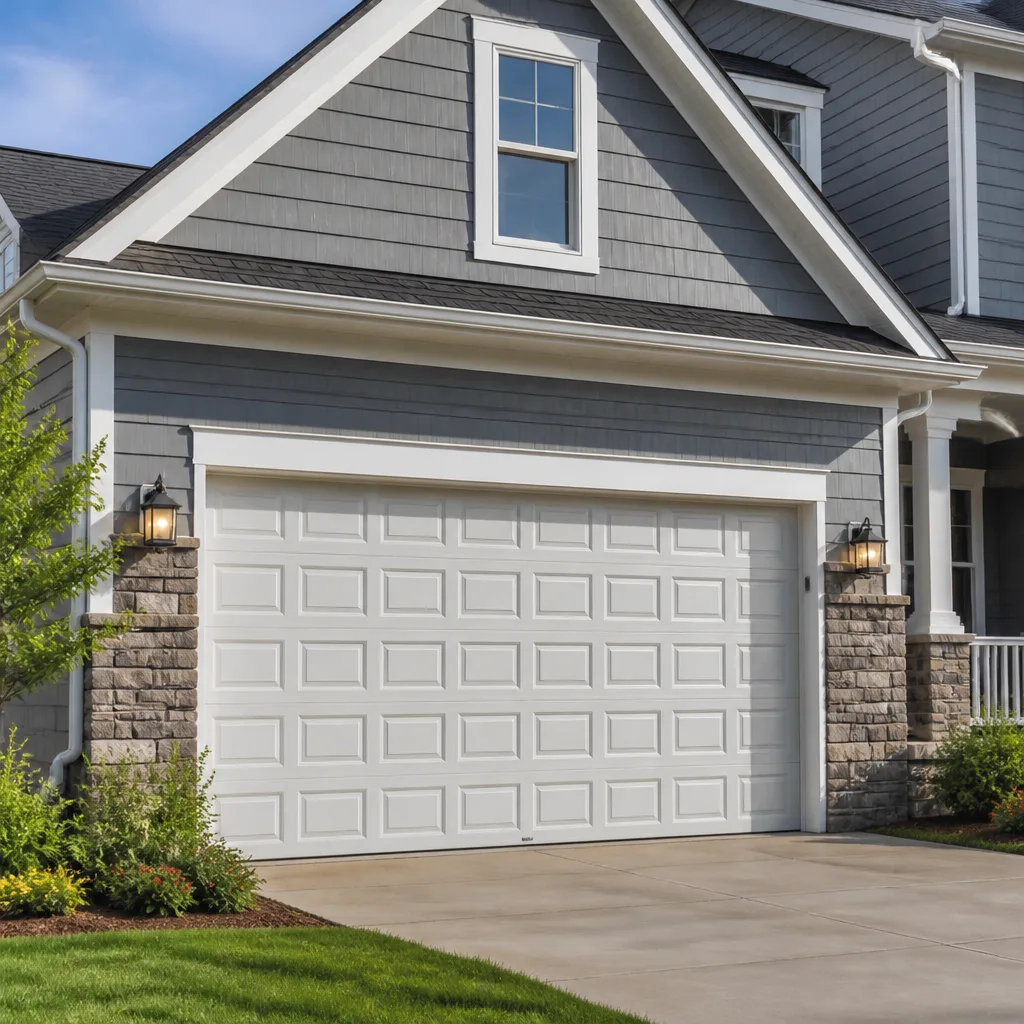 Raised-panel steel
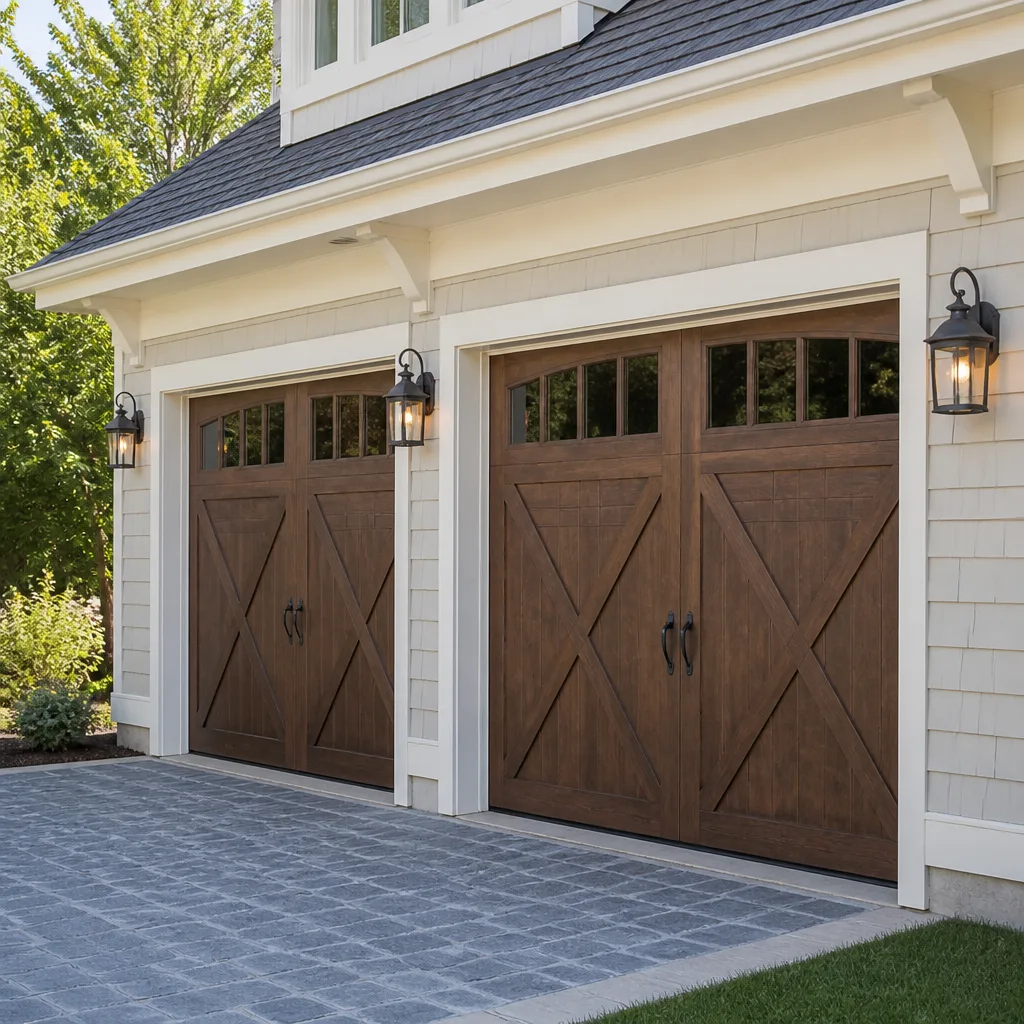 Carriage house
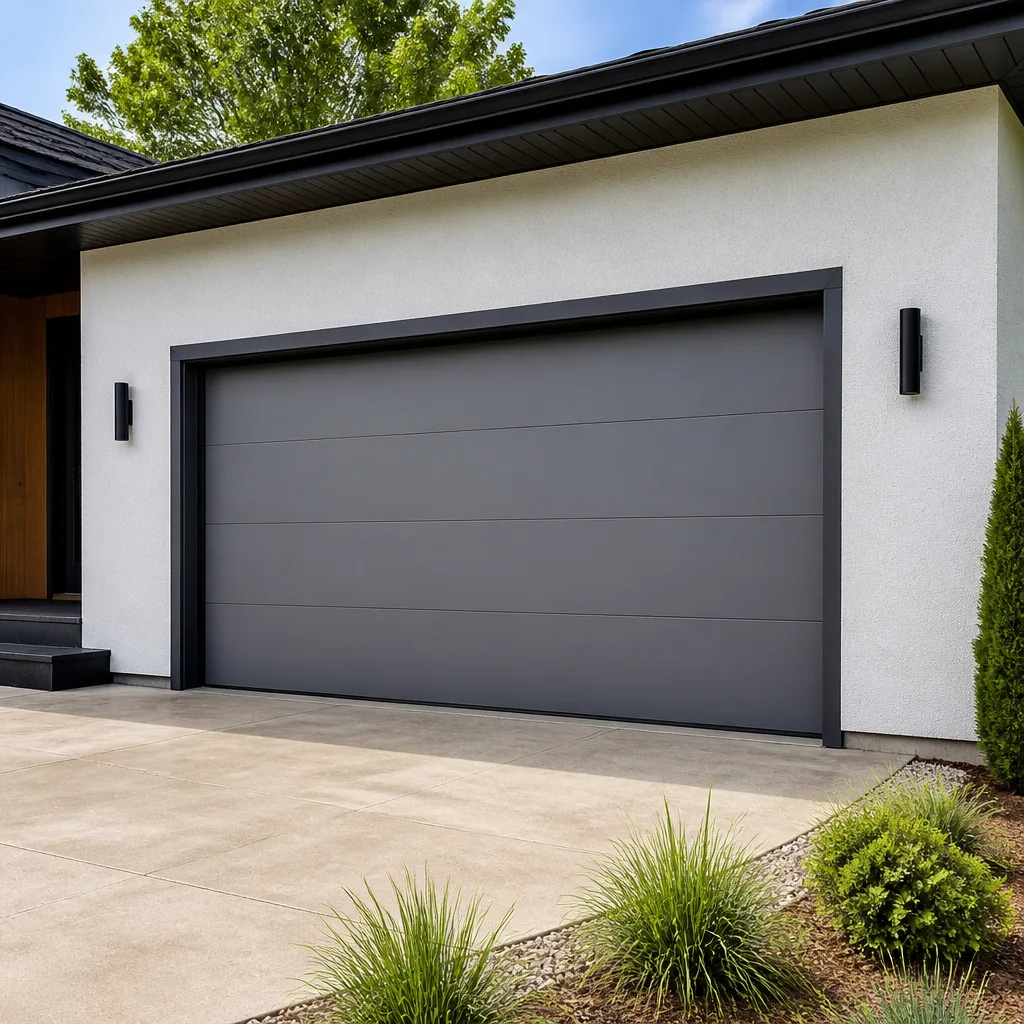 Modern flush
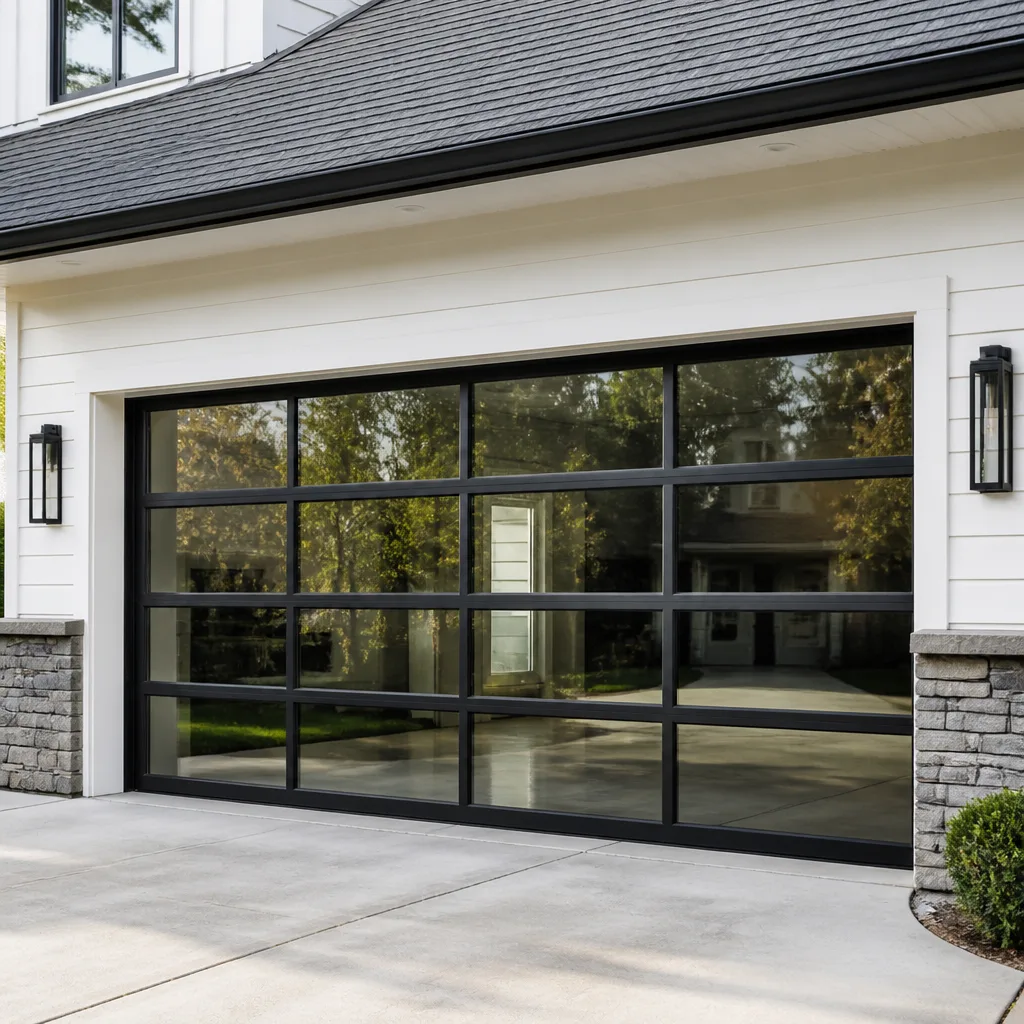 Full-view glass
 LiftMaster openers
 Chamberlain openers
Full 25-point door and opener safety check with every visit - springs, cables, rollers, tracks, and your LiftMaster or Chamberlain opener included
You get a price before we start. It does not change when the pro arrives.
Get your free estimateGarage Door Repair Maintenance Schedule: What to Do and When
Generic maintenance guides tell you to lubricate your springs every six months. In St. Paul, that advice can mean lubricating in February, when grease thickens in the cold and does nothing but hold grit against the metal, and skipping the fall window right before the season that kills more door hardware than any other. The calendar most homeowners follow was written somewhere without a real winter. Ours isn’t. This guide lays out a four-season maintenance schedule built around how freeze-thaw cycles, road salt, and summer humidity actually wear down a garage door in St. Paul, with a hardware lifespan table, the right lubricants for Minnesota temperatures, and the two annual checks that head off the most expensive repairs we see.
Quick Answer
A garage door in St. Paul needs two major maintenance passes a year – one in fall before the first hard freeze and one in spring after the thaw – plus a monthly visual check and cleaning of the safety sensors. Fall is the pass that matters most: it’s the last chance to tighten, lubricate, and seal before winter cold and road salt start working on the door. Spring is for cleanup, water damage inspection, and resetting anything the freeze pushed out of alignment.
Styles & brands we work with
- Raised-panel steel
- Carriage house
- Modern flush
- Full-view glass
- LiftMaster openers
- Chamberlain openers
Table of Contents
- Why a Standard Maintenance Schedule Fails in St. Paul
- The Four-Season Garage Door Calendar for St. Paul
- The Right Lubricants for Minnesota Temperatures
- Garage Door Hardware Lifespan in Twin Cities Conditions
- The Two Annual Checks That Prevent the Most Expensive Repairs
- Monthly Checks: Safety Sensors and Opener Behavior
- How to Keep a Door Log That Saves You Money
- What Homeowners Should Never Adjust Themselves
Why a Standard Maintenance Schedule Fails in St. Paul
Most garage door maintenance advice is written for a mild climate where the worst thing that happens to a door is a little dust. St. Paul is a different job. A garage door here lives through a freeze-thaw cycle that runs from late fall into early spring, and each one works on the hardware a little differently.
Cold shrinks and stiffens. Steel tracks contract. Lubricant thickens. The rubber bottom seal hardens and can crack where it meets the concrete. Then the thaw comes, and any water that got into the seams or under the door freezes again overnight. That expansion is what warps tracks and splits wood panels. Add road salt tracked in from the alley and street, which dries on the lower panels and the bottom seal, and the door is dealing with three separate attacks at once – mechanical, thermal, and chemical.
Summer is gentler in St. Paul, but humidity does its own damage. It swells wood door panels, softens and warps the bottom weatherstripping, and works into any seam that lost its paint over the winter. A door that gets one generic checklist all year misses every one of these windows. This guide rebuilds the schedule around them.
If your door is already showing a problem – a panel that won’t sit flush, a track that has visibly bent, a door that slams down instead of settling – that’s a garage door repair job, not a maintenance one. Maintenance prevents the repair; it doesn’t replace it.
The Four-Season Garage Door Calendar for St. Paul
Here’s the schedule we’d hand any St. Paul homeowner. It’s built around the calendar, not around a fixed number of months, because the risk windows in Minnesota are seasonal and specific.
Fall – Before the First Hard Freeze
This is the pass that matters most. Everything you do in fall is protecting the door through the season that breaks the most hardware. Do it before the first night that stays below freezing.
- Wash the door and inspect every panel for cracks, chips, or bare metal, especially along the bottom two panels where road spray hits.
- Touch up or repaint any bare spots. Bare steel near the floor is where rust starts, and rust grabs road salt.
- Lubricate hinges, rollers, and the torsion spring with a cold-rated product (see the next section – this is where most generic advice gets it wrong).
- Check the bottom seal for hardness or cracks. A stiff seal won’t keep meltwater out, and water under the door freezes to the concrete.
- Tighten every hinge bolt and the track brackets. Cold contracts metal, and loose hardware gets looser.
- Test the door balance by hand – it should lift smoothly and stay roughly where you let it go.
- Clear the tracks of grit and salt residue with a damp cloth, then dry them.
Winter – Monthly Visual Only
Don’t lubricate in deep winter. Cold thickens grease, and adding more on top of thickened grease traps grit against the metal. Keep the bottom seal clear of ice and salt, sweep the concrete in front of the door, and do a quick monthly look at the track alignment and the opener’s behavior. That’s it.
Spring – After the Thaw
Spring is cleanup and inspection. The freeze-thaw cycle has been pushing on the door for months, and this is when you check what moved.
- Look down the full length of each vertical track. Any slight bend outward at the bottom is a sign water got in and froze under the door.
- Inspect the bottom two panels for rust, peeling paint, or split wood. This is where the salt sat all winter.
- Replace the bottom seal if it hardened over winter – a fresh seal is cheap protection against the next freeze.
- Re-clean and re-lubricate the hinges, rollers, and spring with the same cold-rated product.
- Test the safety sensors by waving an object through the beam and confirming the door reverses.
- Recheck door balance and listen for new sounds – grinding, popping, or a heavy thunk at the bottom.
Summer – Monthly Humidity Watch
Summer in St. Paul is the humidity season for wood doors. Check painted wood panels for swelling along the seams, touch up any paint that lifted over the winter, and inspect the bottom seal again for softening or warping. Lubricate once mid-summer if the door gets heavy use.
The Right Lubricants for Minnesota Temperatures
The single most common maintenance error we see in St. Paul is the wrong lubricant. Standard WD-40 is the wrong choice for a garage door in any climate, and in Minnesota it’s actively counterproductive. It’s a light solvent, not a lasting lubricant – it evaporates, leaves very little film, and attracts dust while it’s there. In cold weather, what’s left of a light oil like that can stiffen and bind the rollers.
What you want is a product designed to stay effective below freezing. The two families that work:
- Silicone-based spray lubricant. Stays fluid at very cold temperatures, doesn’t attract dust, and is safe on rubber and plastic parts like the bottom seal.
- White lithium grease. Heavier, longer-lasting, and good on hinges and the torsion spring where you want a thicker film. It works in cold, though it’s not the best choice for the rollers or seals.
What the product needs to say on the label is that it stays effective at low temperatures – some advertise performance at -20°F and colder. If a lubricant doesn’t specify cold performance, assume it’s for a garage in a milder climate and skip it. On rollers, use a silicone spray, not grease. On hinges and the torsion spring, a white lithium grease is a solid choice. Never use motor oil, cooking oil, or anything you wouldn’t use on metal in a Minnesota winter.
The bottom seal and any rubber weatherstripping get a silicone product only – petroleum-based products dry out and crack rubber. If your door has wood panels, a fresh coat of exterior paint or sealant each fall protects the wood from both humidity and salt. A Clopay or Amarr steel door will tolerate more neglect than a wood door, but the seal and hardware rules are identical regardless of what’s on the label.
Garage Door Hardware Lifespan in Twin Cities Conditions
National averages are fine for a national article. Here’s what we’d expect in the Twin Cities, where the freeze-thaw cycle and road salt both speed up wear.
- Torsion springs. National average: roughly 10,000 to 15,000 open-and-close cycles. In St. Paul, a door that faces salt spray and cold cycling often gets there faster – the cold makes the metal more brittle, and every hard winter cycle is closer to failure than a mild-climate cycle. Plan on a spring replacement every several years, and inspect them twice a year for rust and visible gaps in the coil.
- Cables. National average: 10 to 15 years. Here, salt spray from the road speeds rust along the lower cable runs, so a St. Paul door’s cables can show real wear younger than the national number suggests. Cables should be inspected twice a year and replaced at the first sign of fraying – a frayed cable is a safety concern, not a nuisance.
- Nylon or steel rollers. National average: 5 to 10 years. In St. Paul, salt and grit tracked onto the tracks wear rollers faster, so look for flat spots and wobble every fall.
- Bottom weatherstripping. National average: 2 to 5 years. In Minnesota, the bottom seal gets hit by salt, ice, and repeated freeze-thaw, so plan on replacing it more often – think two to four years for a door that opens daily.
- Paint and finish. Steel doors with a factory finish hold up reasonably well. Wood doors need a fresh coat every couple of years in this climate.
The overall rule: the bottom two feet of the door and the lower track get more abuse here than anywhere else, so inspect them at the start of each season. If your hardware is past its window, the Harvest Garage Door Repair team can look at the whole door and tell you what’s worth replacing now and what has another season in it.
The Two Annual Checks That Prevent the Most Expensive Repairs
Two maintenance checks, done at the right times, prevent the two most expensive repairs St. Paul homeowners face: spring failure and track warping from water infiltration at the floor. Neither takes long. Both are worth doing with a flashlight and a few minutes of attention.
The Fall Spring Check
The torsion spring is the part of a garage door that’s under the most tension and the part most likely to fail in cold weather. In the fall, before the freeze settles in, inspect the full length of the spring for rust, small gaps in the coil, and any visible thinning. Check the balance by hand – a door that won’t stay where you leave it is telling you the spring is losing tension. If you see rust lines or gaps, the spring is closer to breaking than you’d guess. Do this check before the season, not during it, because a spring that breaks in February leaves the door stuck until it’s replaced.
If a spring is showing signs of failing, get it replaced in fall. If you can’t, at least know that it’s the part you’ll be replacing first.
The Spring Thaw Under-Door Check
Water infiltration at the bottom of the door is how tracks warp. Meltwater runs down the door, gets under the bottom seal, and freezes to the concrete. Over the season, that water reaches the bottom of the vertical tracks, and when it freezes and thaws, it can push the track outward so slightly that the door’s rollers bind on the way up. The spring thaw check is simple: with the door open, look straight down each vertical track from floor to header. Any bend at the bottom – even a slight one – says water has been getting in and freezing. A straight track with a tight bottom seal prevents the repair entirely.
If your track is already bent, that’s a repair, not maintenance. Never bend it back yourself – the rollers ride in it, and a badly adjusted track can send the door off its rails. Call garage door repair in St. Paul instead.
Monthly Checks: Safety Sensors and Opener Behavior
The opener gets a quick check every month, because it’s the system most likely to fail without warning. Two things to test: the safety sensors and the force behavior.
- Clean the sensor lenses with a dry cloth – they get dusty, and dust is the most common reason a door stops closing on command.
- Wave an object through the sensor beam while the door is closing. The door should reverse immediately. If it doesn’t, stop using the opener until it’s checked.
- Test the auto-reverse feature by laying a small object (a 2×4 works) flat on the concrete where the door meets it. The door should reverse when it touches the object.
- Listen to the opener under load. Grinding, straining, or a motor that runs but doesn’t lift the door means something is wrong with the drive or the door is binding on its track.
- Check that the manual release still works smoothly – a release that’s stuck or stiff is a sign of a worn opener.
Openers from LiftMaster, Chamberlain, Genie, or Craftsman all follow these same tests. Newer units with smart features and battery backup are worth checking for firmware updates and battery condition once a year, along with the rest. If the opener is the part that’s failing – the door won’t lift on command, or the remote has gone dead – that’s an opener job, not a door job, and our garage door opener repair team handles every brand we’ve listed.
There’s nothing subtle about the check itself. A door that hesitates or reverses at the bottom is doing exactly what the sensors and the safety reverse are built to do when something is wrong. Listen to it.
How to Keep a Door Log That Saves You Money
A one-page door log is the cheapest maintenance tool you’ll ever use. When a technician arrives, a written history turns a mystery into a diagnosis, and it keeps any warranty claim on solid ground.
Keep a notebook or a note on your phone. Every time the door is worked on – whether you did it or a professional did – write down the date, what was done, what parts were replaced, and the brand and model if you know it. On the door itself, the manufacturer sticker on the opener and the door’s bottom panel gives you the model numbers for Clopay, Amarr, LiftMaster, Chamberlain, Genie, Wayne Dalton, Craftsman, or Raynor hardware. Write those down once and you’re set.
Add a line whenever the door does something new: a new sound, a hesitation, a sensor that started misbehaving, a bottom seal that looks stiff. When a technician arrives, those notes tell the story faster than any visual inspection can. A spring that was replaced two winters ago, a track that got bumped, a seal that’s two seasons old – all of that goes into how the problem gets diagnosed.
The same log matters when it comes time to replace the door rather than repair it. Twenty minutes of record-keeping across a few years gives you a clear picture of when a door has reached the end of its life. Our St. Paul team sees plenty of doors that just needed a $30 part and a door that needed a whole new system, and the difference usually shows up in the log.
One more thing on the log: keep it where you can find it. A note buried in a phone app is better than nothing, but a paper log taped inside the garage wall is the one a technician will actually read.
What Homeowners Should Never Adjust Themselves
There are two parts of a garage door that are genuinely dangerous to touch: the torsion spring and the cables. Both are under high tension, and both can release violently if handled wrong. The torsion spring stores enough energy to seriously injure someone who doesn’t know how to release it safely – it’s one of the more dangerous pieces of hardware in a typical home. The cables carry that same tension along the side of the door, and a cable that snaps under load can whip with enough force to break bones.
Lubricating the spring from the outside is fine, but adjusting tension, replacing the spring, or removing a cable is not a DIY job. If you’re seeing rust lines, gaps in the coil, a sagging door, or a cable that looks frayed, stop using the door and call a trained technician. Same goes for track alignment: a track can look close to straight and still be out enough to send the door off its rails, and bending it back is a job for someone who does it for a living.
What homeowners can safely do: lubricate the hinge points and rollers, clean the tracks, replace the bottom weatherstripping, and run the monthly safety sensor test. That’s a useful maintenance routine without touching the parts that can hurt you.
The rest is a professional’s work. Our technicians have up to 8 years of experience on the brands we service, and we work on the brand you already have – no upselling to a new system because it’s the one we stock.
Common Mistakes to Avoid
- Lubricating on a fixed six-month schedule. The right schedule in St. Paul is seasonal, not calendar-generic. A February lubricant pass on top of thickened cold grease does more harm than good.
- Using WD-40 or motor oil on the rollers and spring. Both are too light or too thick for Minnesota temperatures and either attract grit or stiffen in the cold. Use a cold-rated silicone or white lithium product.
- Skipping the fall pass when the summer looked fine. Fall is the last chance to seal, tighten, and lubricate before the season that breaks the most hardware. A door that behaved all summer can still fail in January.
- Ignoring the bottom seal. A stiff bottom seal lets meltwater under the door, and that water freezing to the concrete is how your track starts to warp. Replacing the seal is a small job that prevents an expensive one.
- Bending a warped track back into place. The bottom of the track is where water pushes it out, and bending it by hand can throw the door off its rails. Let a professional handle track alignment.
- Adjusting the torsion spring yourself. It’s the single most dangerous part of the door. A trained technician is the only safe route.
- Not keeping a door log. A written history saves diagnosis time, helps the technician get it right the first time, and keeps any warranty claim clean.
See the difference
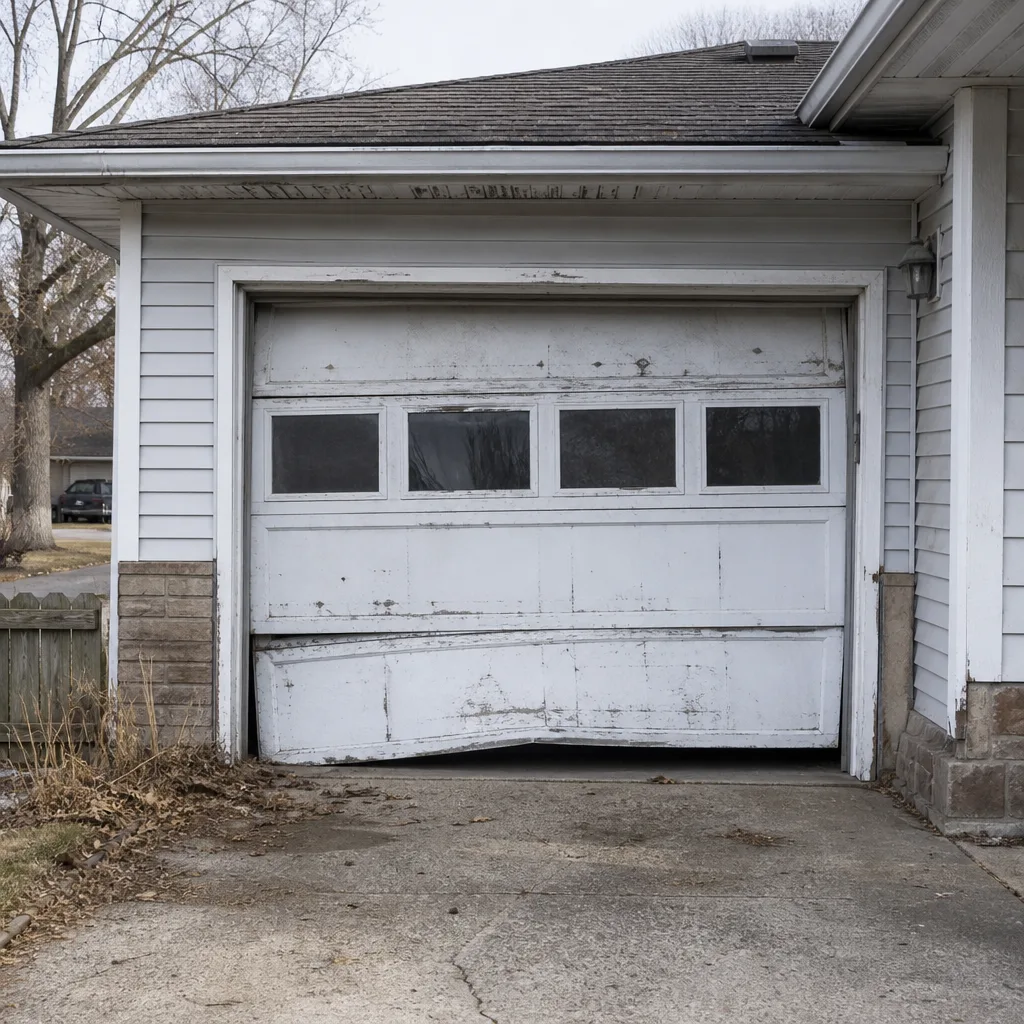 Before
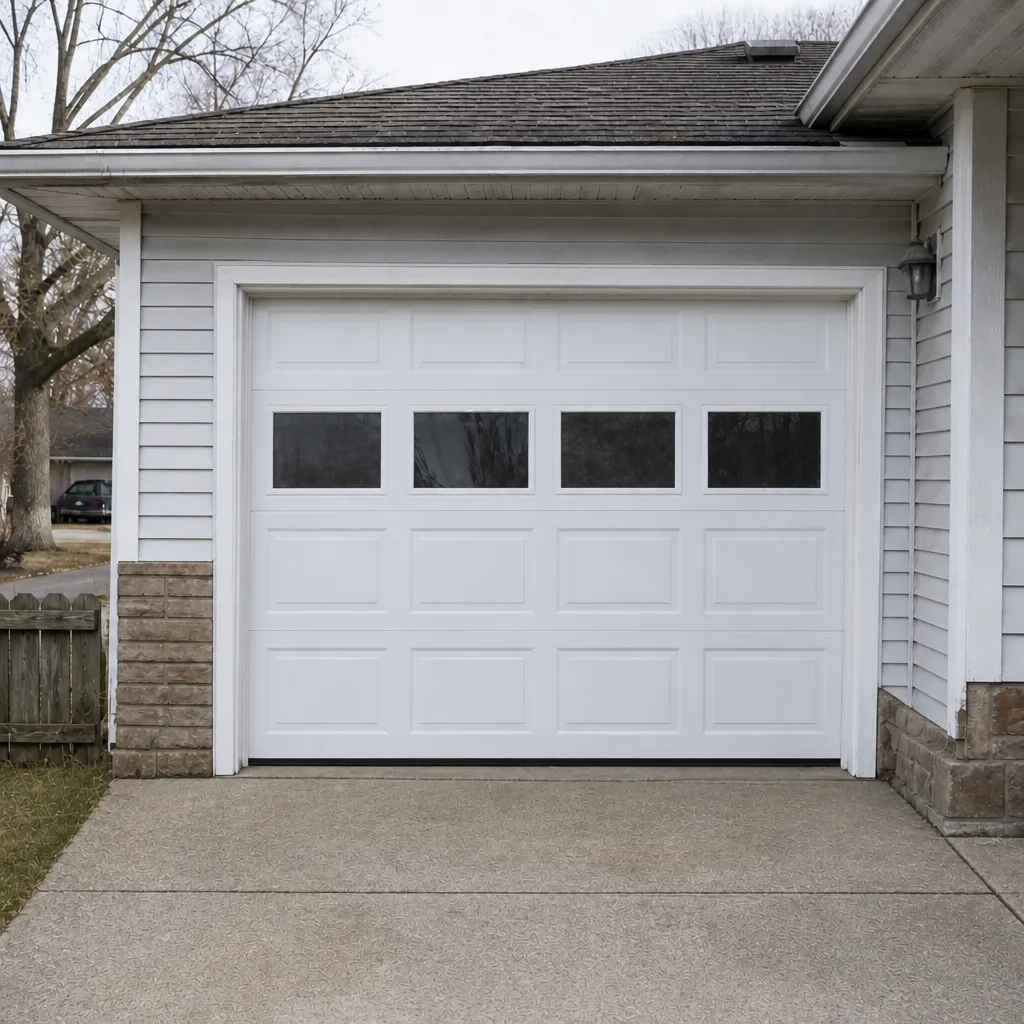 After
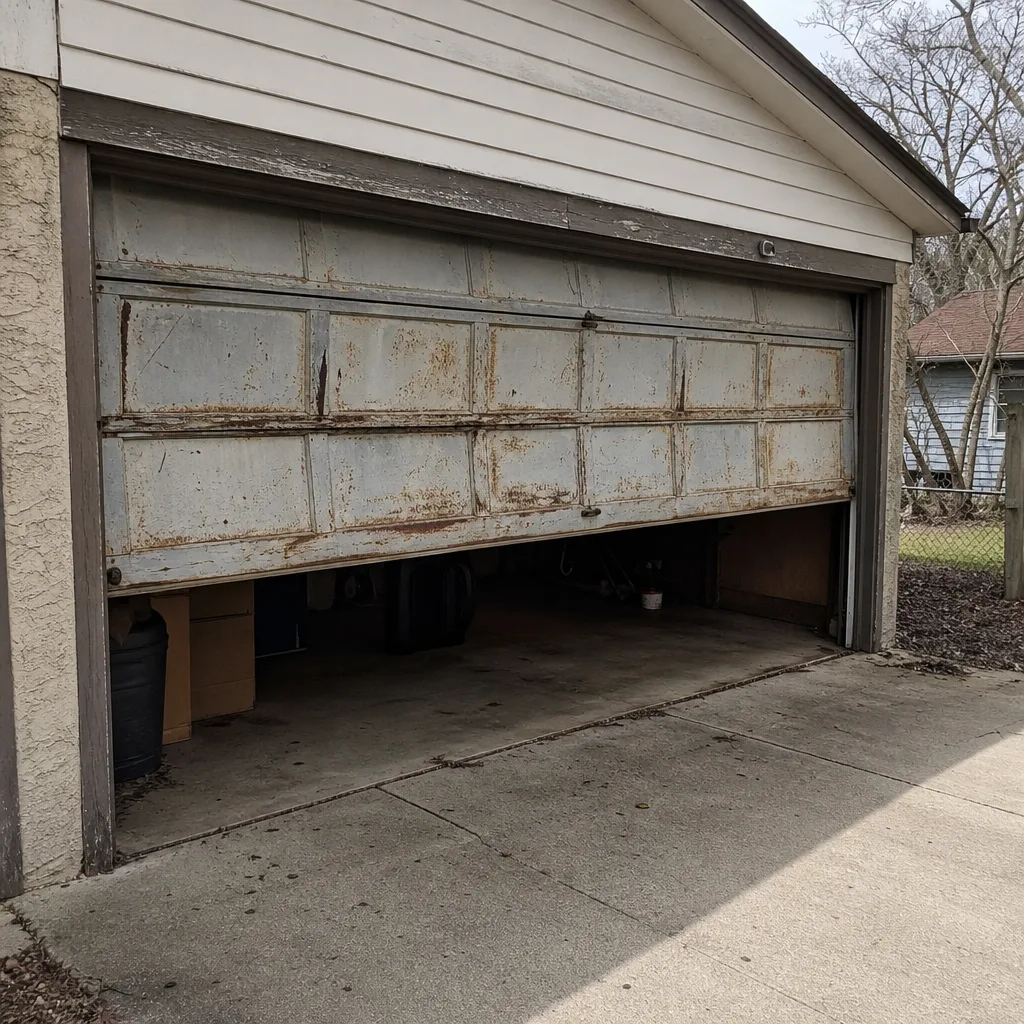 Before
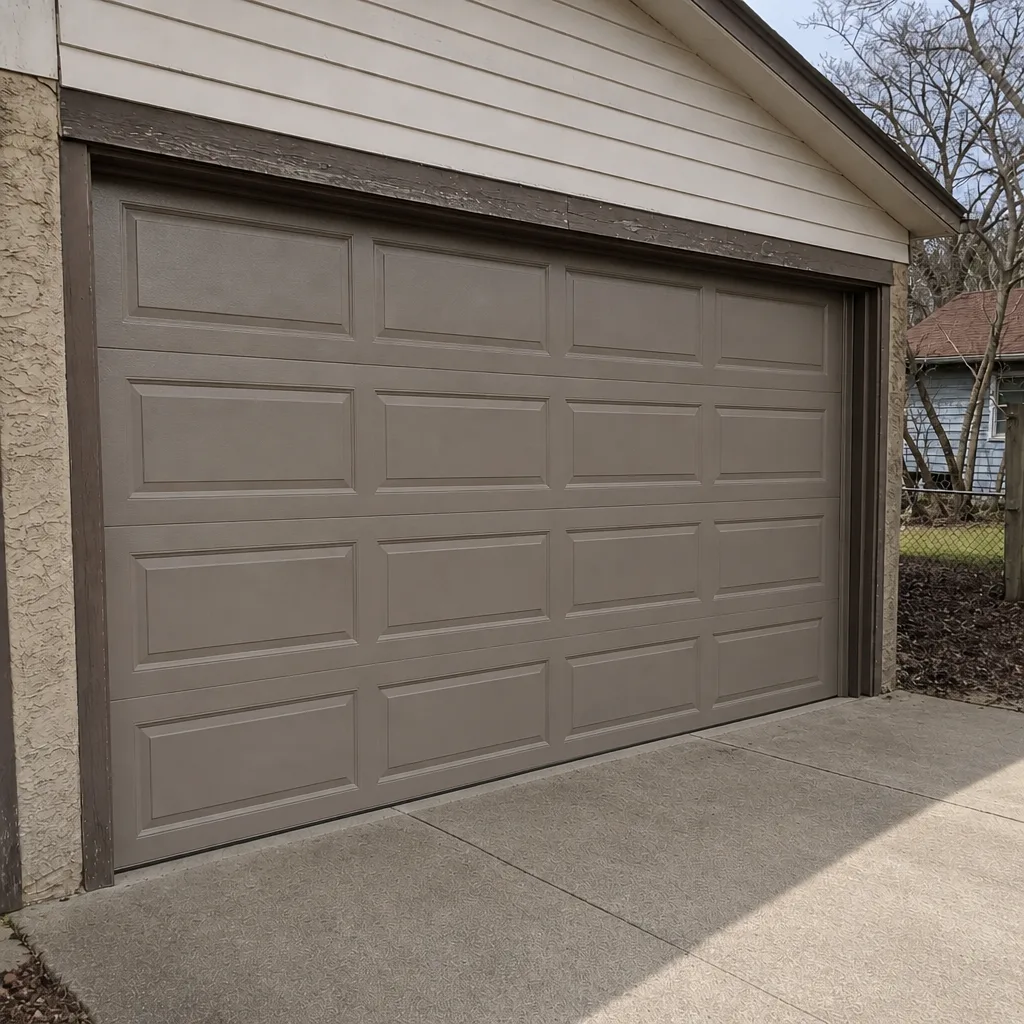 After
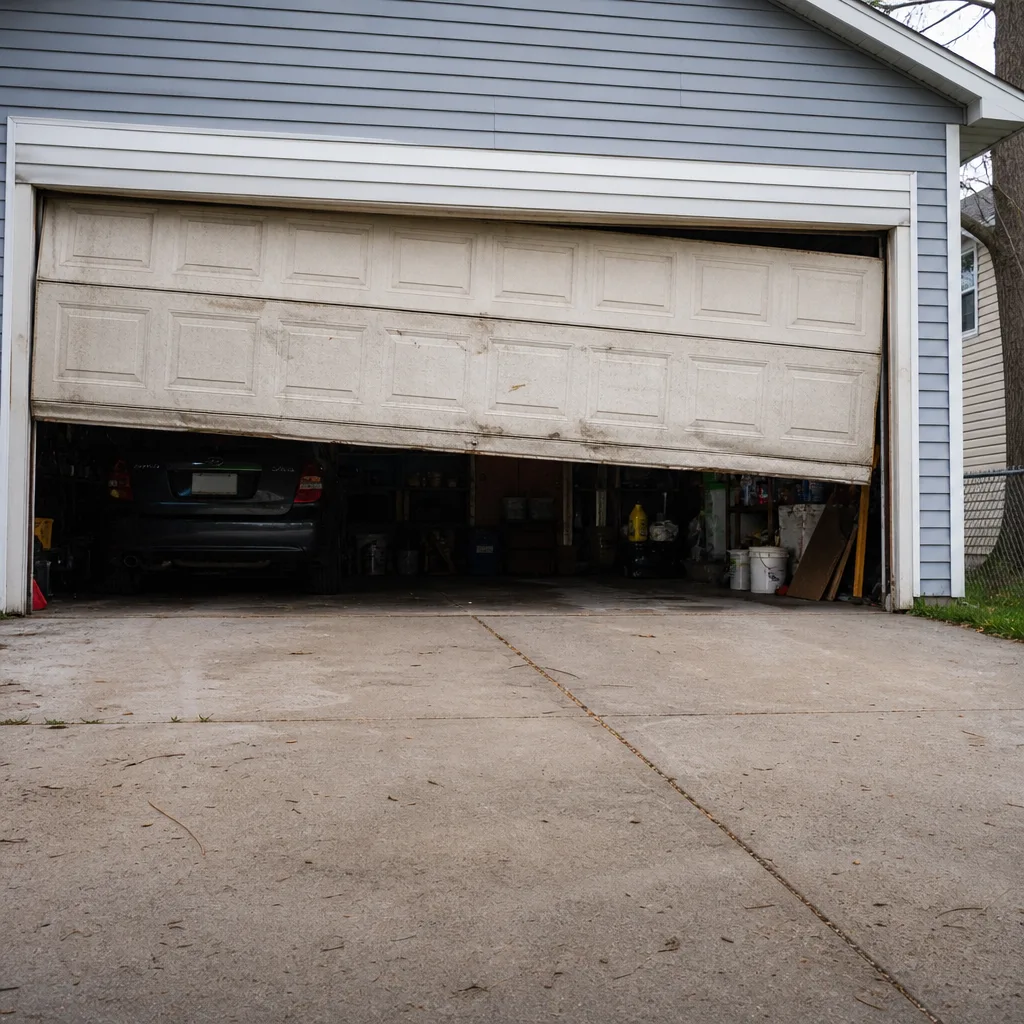 Before
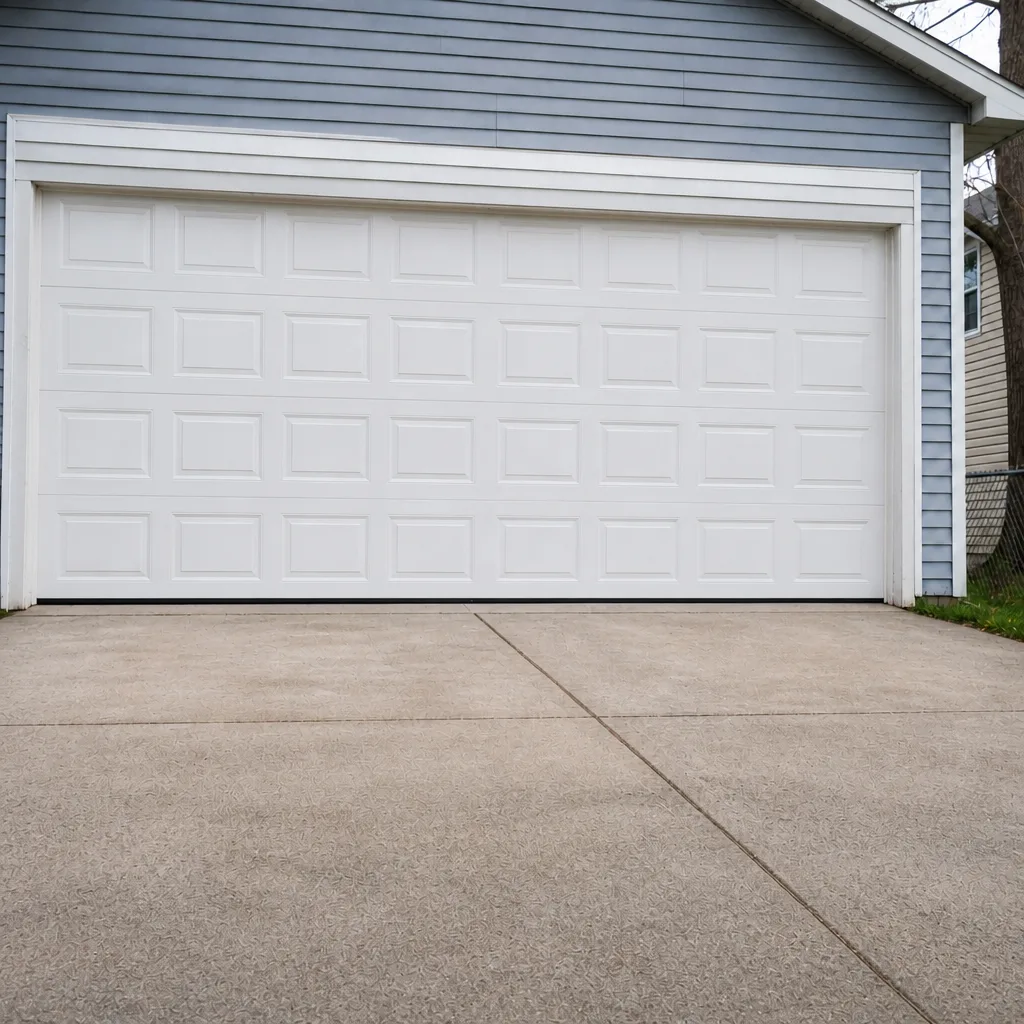 After
When to Call a Professional
Call a professional when the door is loud where it used to be quiet, when it lifts partway and stops, when the bottom seal is letting water in, or when the spring shows rust, gaps, or a loss of tension. Call if the door hesitates, reverses, or stops lifting on command – that’s usually the opener, and opener repair is a separate job from the door itself. Call if the track is visibly bent at the bottom, if a cable looks frayed, or if the door has come out of its track at all. Call before the first hard freeze, not after – fall is the season for scheduled maintenance, and getting a technician on the door before winter starts is the way to avoid a spring failure in February. Harvest Garage Door Repair offers free estimates in St. Paul – call (888) 270-3708.
Frequently Asked Questions
Twice a year for a full inspection and lubrication pass – once in fall before the hard freeze, and once in spring after the thaw – plus a monthly safety sensor check and visual inspection. The seasonal timing matters more than the frequency, because the freeze-thaw cycle and road salt wear on the door in a way that a generic calendar doesn’t capture. Call (888) 270-3708 for a free estimate if you’d rather have a technician do the twice-yearly pass.
No. WD-40 is a light solvent, not a lasting lubricant, and in cold weather it leaves a film that can stiffen and attract grit. Use a cold-rated silicone spray on rollers and the bottom seal, and a white lithium grease on hinges and the torsion spring. A lubricant that doesn’t specify cold performance isn’t the right product for a St. Paul door.
Plan on a spring replacement every several years in this climate. National averages are 10,000 to 15,000 cycles on a torsion spring, but St. Paul’s freeze-thaw cycling and cold temperatures make the metal more brittle, so hardware here often reaches failure slightly faster than in mild climates. Inspect springs twice a year, and if you see rust, gaps in the coil, or a loss of tension, call (888) 270-3708 for a free estimate rather than guessing.
Water is getting under the bottom seal, and freezing to the concrete overnight. A stiff or cracked bottom seal is the most common cause, and it’s also how the lower track starts to warp. Check the seal in fall before the first hard freeze, and replace it if it’s hardened or cracked. If the track is already bent at the bottom, that’s a professional repair – don’t bend it back yourself.
No. The torsion spring, and the cables beside it, are under high tension and are the dangerous parts of the system. Lubricating the spring from the outside is fine, but adjusting tension, replacing a spring, or removing a cable should be left to a trained technician. Stop using the door if you see rust lines, gaps in the coil, or a frayed cable, and call for a professional inspection.
Maintenance helps, but the paperwork is what counts. Many door and opener warranties from brands like LiftMaster, Chamberlain, Genie, or Clopay require that service records be kept, so a simple door log with dates, parts, and what was done protects you if a claim comes up. Keep the log where you can find it, and ask the manufacturer what their warranty specifically requires.
The Bottom Line
A garage door in St. Paul doesn’t need a generic maintenance schedule – it needs one built around the seasons. Fall is the pass that protects the door through the freeze-thaw cycle and road salt that wear down the hardware. Spring is the check for what the winter moved, cracked, or rusted. Monthly checks on the safety sensors and opener behavior catch the small failures before they become expensive ones. Two annual checks – the fall spring inspection and the spring thaw under-door check – prevent the two most expensive repairs a St. Paul homeowner faces. Our technicians have up to 8 years of experience, and we work on the brand you already have.
Get Your Door Checked Before the Next Season
If your door is showing any of the warning signs in this guide – a strained opener, a bottom track that looks bent, a spring with rust lines, or a seal that’s stopped sealing – don’t wait for the next season to find out what’s wrong. We work on LiftMaster, Chamberlain, Genie, Clopay, and the other major brands, and garage doors are all we do. Call (888) 270-3708 for a free estimate. We answer 24/7. Fast dispatch from 7am to 7pm, Sunday through Friday, and we’re closed Saturday.
Written by the team at Harvest Garage Door Repair.